


PS: per tutti i servizi aggiornati e i prezzi, rivolgetevi direttamente al singolo esercizio commerciale.
The clear, unspoilt waters of the island of Elba are one of its main attractions. In summer, however, jellyfish can sometimes drift close to the shore, especially on very hot, windless days . Fortunately there are stretches of coast where currents and winds keep these animals away; beaches on the south‑western and southern coasts such as Fetovaia, Cavoli and Seccheto and the long crescent of Lacona seldom have them, as do the northern beaches of Procchio and Biodola . More isolated coves on the west coast – Chiessi, Patresi and Sant’Andrea – also offer deep, constantly moving water that jellyfish dislike . This guide prepared by the Hotel Giardino team explains why jellyfish appear, how to avoid them and which beaches are “medusa‑free”, together with first‑aid advice and ideas for excursions.
Why are there sometimes lots of jellyfish on Elba?
Jellyfish tend to approach the coast during periods of calm, warm weather. They are carried by currents and winds: northerly winds like Tramontana or Maestrale can push them towards south‑facing beaches, while a scirocco (south‑easterly) breeze often drives them out to sea . The phenomenon is seasonal and variable; some summers, such as 2017, saw hardly any jellyfish, while other years experienced “blooms” caused by a combination of currents, warm water and a decline in natural predators . Climate change and the reduction of fish and turtle populations are increasing jellyfish numbers .
Are Elba’s jellyfish dangerous?
Parents often worry whether local jellyfish are harmful. The most common species, Pelagia noctiluca (recognisable by its pink‑violet colour), has stinging tentacles that cause a sharp pain, itching and redness on the skin . For healthy adults and children the discomfort usually passes within about half an hour with simple first‑aid measures . Severe allergic reactions are rare but can occur; if symptoms spread over the body or include breathing difficulty, vomiting or fainting, you should seek medical attention in Portoferraio . For most swimmers jellyfish stings are an annoyance rather than a serious danger .
How to avoid meeting jellyfish
Choosing the beach according to the wind can greatly reduce the chance of finding jellyfish. Elba’s different coastlines face all four points of the compass; if one side is affected, another will usually be clear . Use the wind direction as a guide:
| Dominant wind | Recommended beaches (few jellyfish) | Beaches to avoid (possible jellyfish) |
|---|---|---|
| Tramontana / Maestrale (N/NO) | South and south‑east coasts (e.g. Lacona, Lido di Capoliveri, Fetovaia) – the wind drives jellyfish offshore | North coasts (Procchio, Enfola, Sansone) – jellyfish can be pushed towards shore |
| Scirocco / Ostro (SE/S) | North and north‑west coasts (Biodola, Sansone, Marciana Marina) – waters are cleaned by the south wind | South coasts (Lacona, Marina di Campo, Cavoli) – jellyfish may be blown towards the beach |
| Libeccio / Ponente (SO/O) | Eastern coasts (Porto Azzurro, Rio Marina, Ortano) – protected from westerlies | Western coasts (Pomonte, Chiessi, Fetovaia) – jellyfish can accumulate with the west wind |
| Grecale / Levante (NE/E) | Western and south‑western coasts (Seccheto, Chiessi, Marina di Campo) – the grecale drives jellyfish away | Eastern coasts (Cavo, Ortano, Lido di Capoliveri) – possible jellyfish blown in by east winds |
These guidelines are general; currents change and jellyfish occasionally appear unexpectedly . Ask locals or lifeguards about the winds, look at the sea before swimming and move to a different bay if you see purple “balls” near the shore . Elba’s varied coastline always offers an alternative.
Beaches equipped with anti‑jellyfish nets
A 100 % guaranteed way to swim without jellyfish is to choose a beach with a floating barrier. Elba has tested nets that enclose a section of sea close to shore . Currently only one beach has an active net:
| Beach | Area | Net | Features & notes |
|---|---|---|---|
| Ortano | East coast (Rio) | Yes (active) – a free net encloses a safe swimming area about 50 × 35 m | Sheltered bay of sand and pebbles with clear water and fish; ideal for families; snorkelling around the little island of Ortano . |
| Straccoligno | South‑east (Capoliveri) | No longer present – nets were installed in the past but removed after 2017 | Small sandy beach suitable for children; still popular with families. |
| Barbarossa | East (Porto Azzurro) | No longer present – experimented with nets in 2014 but none now | Large dark‑gravel beach; suitable for all; if jellyfish appear you can move to nearby sheltered coves (Reale or Terranera) . |
Nets require maintenance and investment, so at present Ortano is the only active “medusa‑proof” beach . If you stay on the eastern side of the island, a day at Ortano offers peace of mind; elsewhere follow the wind‑based advice and always scan the water before entering .
What to do (and not to do) if stung by a jellyfish
Even with precautions, a chance encounter may occur. Do not panic; act calmly to minimise discomfort .
Do immediately
- Rinse with sea water. Wash the affected skin with seawater (never fresh) to remove tentacles and deactivate stinging cells .
- Remove tentacles with a rigid object. Use a credit card or the edge of a plastic scoop to gently scrape off any filaments – never use bare hands .
- Apply a soothing gel or specific cream. Topical products containing aluminium chloride neutralise the venom; many beach clubs and bars keep them .
- Use moderate heat. Jellyfish toxins are sensitive to heat; place a warm stone or handful of warm sand on the sting without rubbing .
- Try natural rinses. Compresses of seawater and bicarbonate or a little white vinegar can ease the pain; even an ammonia‑based insect‑bite lotion helps .
- Monitor symptoms. The burning usually subsides in 20–30 minutes; redness may last a few hours. Protect the area from direct sun and consult a doctor if swelling, difficulty breathing or widespread hives occur .
Do not
- Do not rinse with fresh water. Tap or bottled water triggers the nematocysts and releases more venom .
- Do not rub or scratch. Rubbing irritates the skin and can break remaining stinging cells .
- Do not use pure ammonia or urine. These “folk remedies” are unhygienic and can cause infection .
- Do not apply alcohol. Alcoholic liquids irritate the wound and help the venom penetrate .
- Do not cover with sand or tie a tourniquet. Covering or tightening the area is ineffective and hinders healing .
Following these steps, the pain fades quickly and leaves only a mild memory . Many Elban beaches have lifeguards equipped to help, so do not hesitate to ask for assistance .
What are the “blue jellyfish” seen on Elba?
Occasionally the beaches of Elba are covered with bright blue jelly‑like creatures. These are not true jellyfish but floating hydrozoans called Velella velella, known as “barchette di San Pietro” or by-the‑wind sailors . They appear mainly in spring; for example, in late March 2024 large numbers were stranded on beaches such as Barbarossa, La Pianotta, Ortano and Marina di Campo . Each colony consists of countless polyps that produce little medusae; they have a small vertical “sail” that allows the wind to propel them . Unlike real jellyfish, they do not sting and are harmless to humans . The only nuisance is the unpleasant smell when they decompose on the sand . If you encounter these blue “boats”, simply walk along the shore to avoid stepping on them and let the tide carry them away.
Where to stay to explore all of Elba’s beaches
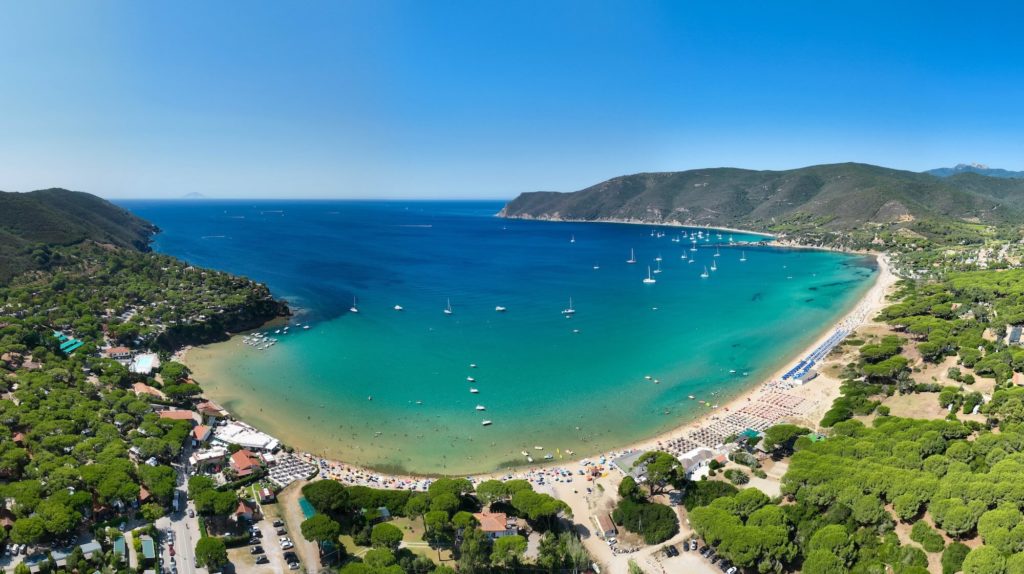
Elba covers about 224 km² but its winding roads mean journeys take longer than the map suggests . To visit different beaches – and to follow the wind to the calmest, jellyfish‑free bays – it is best to base yourself in a central location. Lacona, on the island’s southern coast, is particularly strategic . From here you can drive to Marina di Campo, Capoliveri, Porto Azzurro or Portoferraio in 10–15 minutes . Lacona itself boasts one of the island’s largest beaches, almost 1.2 km of golden sand with both free and serviced areas . Staying in Lacona lets you walk to the beach for calm seas and shallow water, and quickly reach other coasts if jellyfish or weather conditions change.
The family‑run Hotel Giardino is an ideal base for exploring Elba. Set in a 30,000 m² pinewood, it lies about 100 m from the protected dunes of the long Lacona beach . Guests can decide each day whether to enjoy the sea “under the house” or set off to discover another corner of the island . Because public transport is limited, driving is recommended; the hotel provides free shaded parking and helps guests arrange car or scooter rental .
Why choose Hotel Giardino in Lacona?
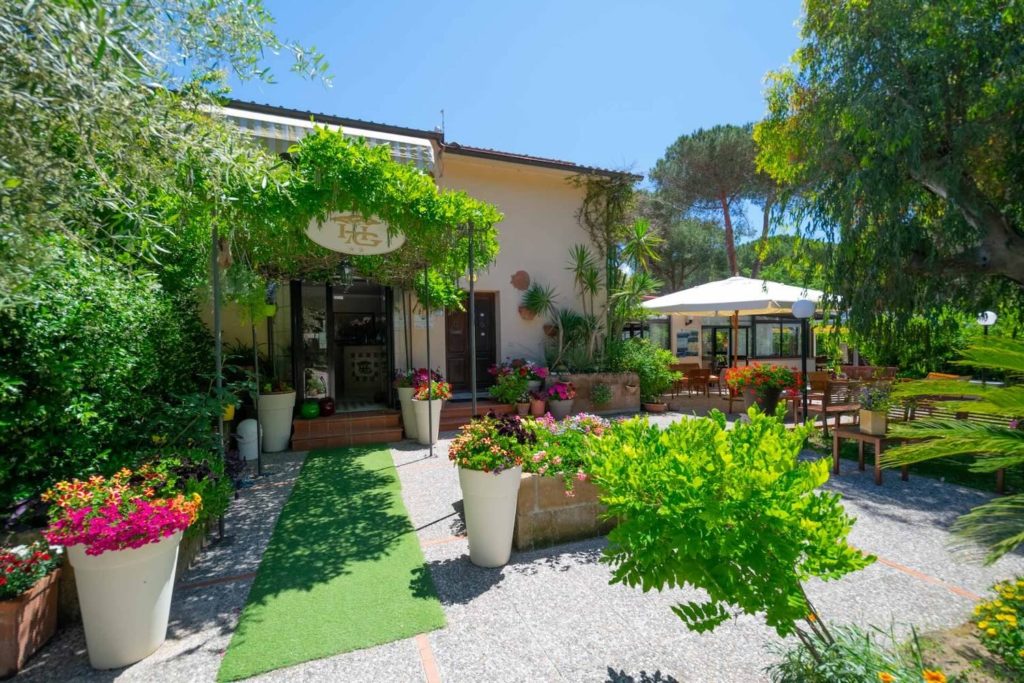
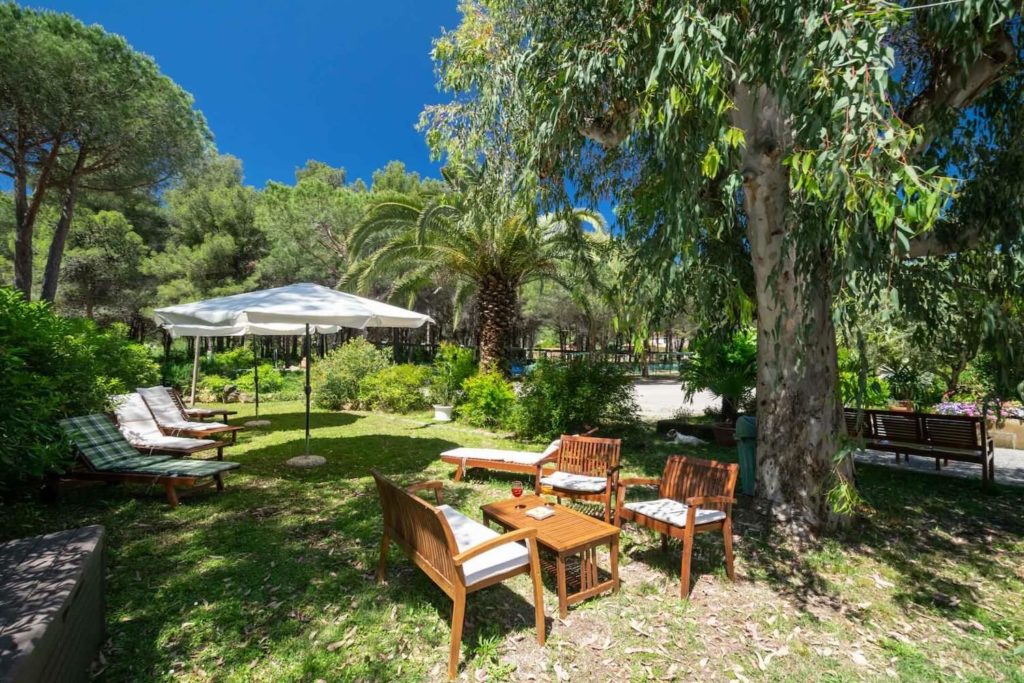
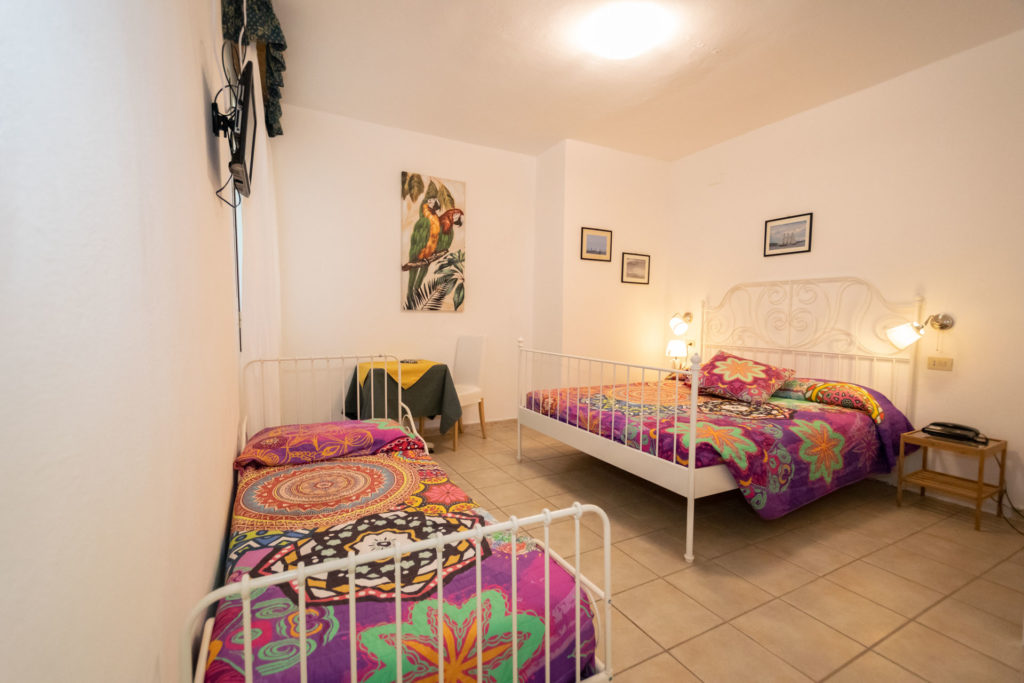
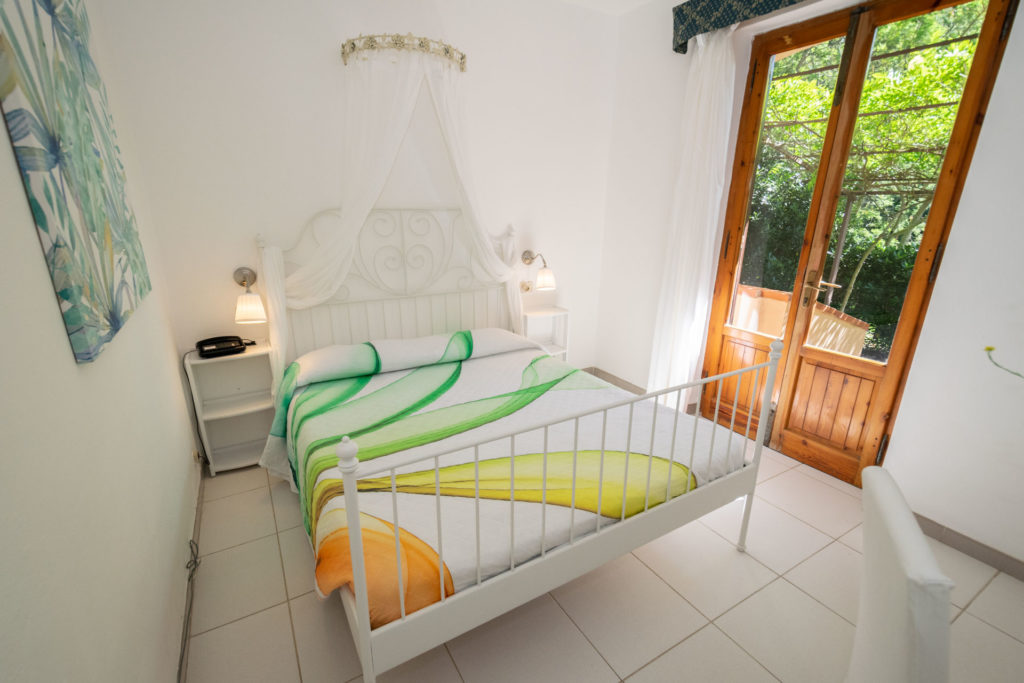
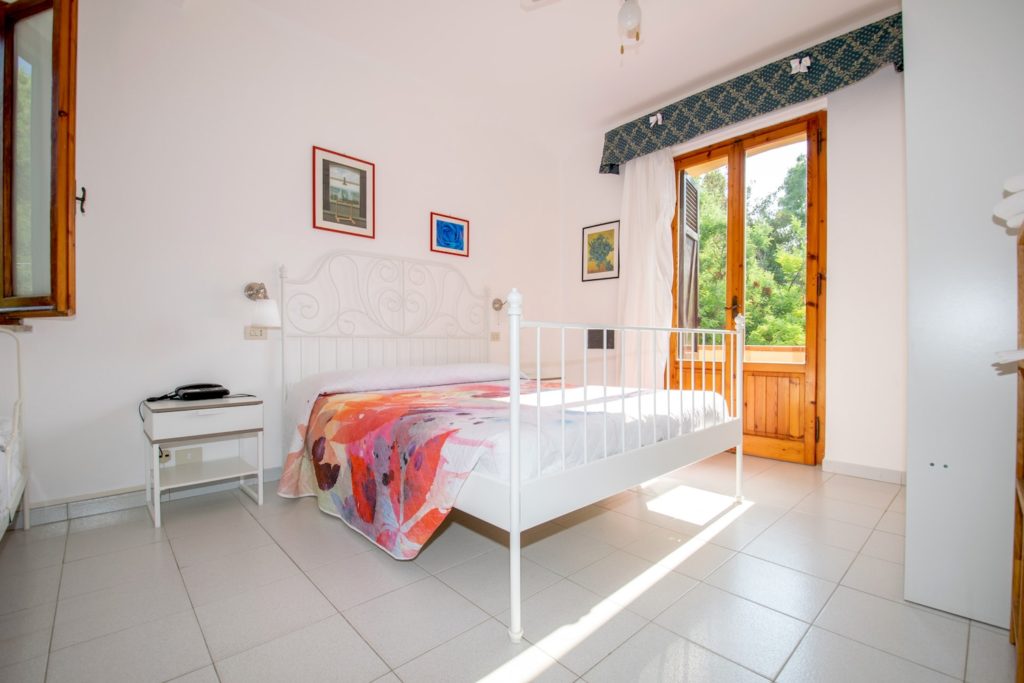
This long‑established, family‑run hotel combines a relaxed camping atmosphere with the comforts of a hotel. Its main strengths include:
- Unbeatable location near the sea. The hotel is only two minutes’ walk from Lacona beach, across the protected sand‑dune area . Families avoid parking hassles and couples enjoy the convenience.
- Immersed in greenery and peace. The 30,000 m² private garden and pine grove offer shade, fresh air and birdsong . Children can play safely away from roads, and everyone can relax after a day at the beach.
- Warm hospitality and homemade cuisine. The family management takes care of guests’ needs. Breakfasts feature home‑made cakes and local products, while lunches and dinners are prepared with care and can be adapted for children or dietary requirements .
- Modern services and activities. Free Wi‑Fi in common areas, a bar, a secure bike room for cyclists, contacts with diving centres for snorkelling, and a pet‑friendly policy ensure a comfortable stay . The hotel also offers discounted ferry tickets and special deals for participants in local sporting events such as the Giro Podistico dell’Elba, Capoliveri Legend Cup and Elbaman triathlon .
- Excellent value and reviews. Combining the freedom of a seaside campground with the comforts of a hotel, the property has consistently positive ratings, especially from families and couples who appreciate its tranquil setting and good value .
What to visit near Lacona and Capoliveri
Staying in Lacona places you within easy reach of many of Elba’s cultural and natural attractions. Within 15–20 minutes by car you can enjoy:
- Capoliveri – A picturesque hill town 10 km away with labyrinthine alleys, stone archways and panoramic squares . At sunset the atmosphere is magical, with outdoor bars and restaurants. The village hosts the Legend of the Innamorata re‑enactment in July and the Grape Festival in early autumn . From Capoliveri you can hike Monte Calamita and visit the old iron mines or descend to coves such as Morcone, Pareti and Innamorata . A short walk outside town leads to the sanctuary of Madonna delle Grazie with stunning views over Golfo Stella .
- Portoferraio – The island’s capital 15 km north. Visit the 16th‑century Medicean forts (Forte Stella and Forte Falcone) with views over the harbour ; Napoléon’s Villa dei Mulini and Teatro dei Vigilanti ; and the Foresiana art gallery . Nearby beaches such as Le Ghiaie, Capo Bianco, Padulella and Sansone are famous for their white pebbles and turquoise water . Visit in late afternoon during the high season to avoid traffic and dine on the waterfront .
- Porto Azzurro – About 13 km east, this pretty fishing village has a lively waterfront lined with boats and restaurants . The imposing 17th‑century Spanish fortress of San Giacomo forms a backdrop . Nearby attractions include Barbarossa beach and the emerald‑green Terranera lake formed in a former mine .
- Marina di Campo – Eleven kilometres west, this seaside resort boasts the island’s longest sandy beach and a promenade full of cafés and boutiques . Children love the Elba Aquarium, one of the largest private aquariums in Europe, featuring sharks, sea turtles and octopus . Marina di Campo is also a starting point for excursions to Monte Perone (home of the Butterfly Sanctuary) and the villages of Sant’Ilario and San Piero .
- Capo Stella and the beaches of Lacona – Behind Hotel Giardino, the headland of Capo Stella offers a scenic trail through fragrant Mediterranean scrub to a 360‑degree viewpoint over Golfo Stella and Lacona . On the eastern side of the bay lies the pebbly beach of Margidore, while Laconella, a hidden cove of white sand, lies at the western end and can be reached via a short path .
From Lacona you can discover every aspect of Elba – sea and mountains, nightlife and old villages, cultural sites and historic mines – knowing you have a tranquil base to return to each evening .
Conclusion
By following the guidance in this article you can enjoy the sea around Elba without worrying about jellyfish: choose your beach according to the wind, head for Ortano or other protected bays when necessary, and know how to treat a sting if it happens . The island also offers a wealth of excursions and places to visit, especially when staying at a central base like Hotel Giardino in Lacona. Elba’s generous nature and turquoise waters await – have a safe and relaxing holiday!