

Introduction
Welcome to Elba, the third‑largest Italian island after Sicily and Sardinia. With an area of about 224 km², Elba offers an astonishing variety of landscapes: golden beaches, pebble coves, Renaissance fortresses, fishing villages and trails through Mediterranean scrub . The island measures roughly 27 km east–west and 18 km north–south and lies only 10 km from the mainland, so it can easily be explored in just a few days . Its mixture of seaside tourism, food traditions, mining history and rich natural heritage have earned Elba a place within the Tuscan Archipelago National Park .
This guide, written by the team at Hotel Giardino in Lacona, takes you on a thorough discovery of the island and our hotel. Throughout the following sections you will find detailed descriptions, frequently asked questions, summary tables and travel advice . As an accommodation provider we only mention our own hotel, while all recommendations for restaurants, museums, beaches and towns are given to help you explore the territory.
Why choose Hotel Giardino?
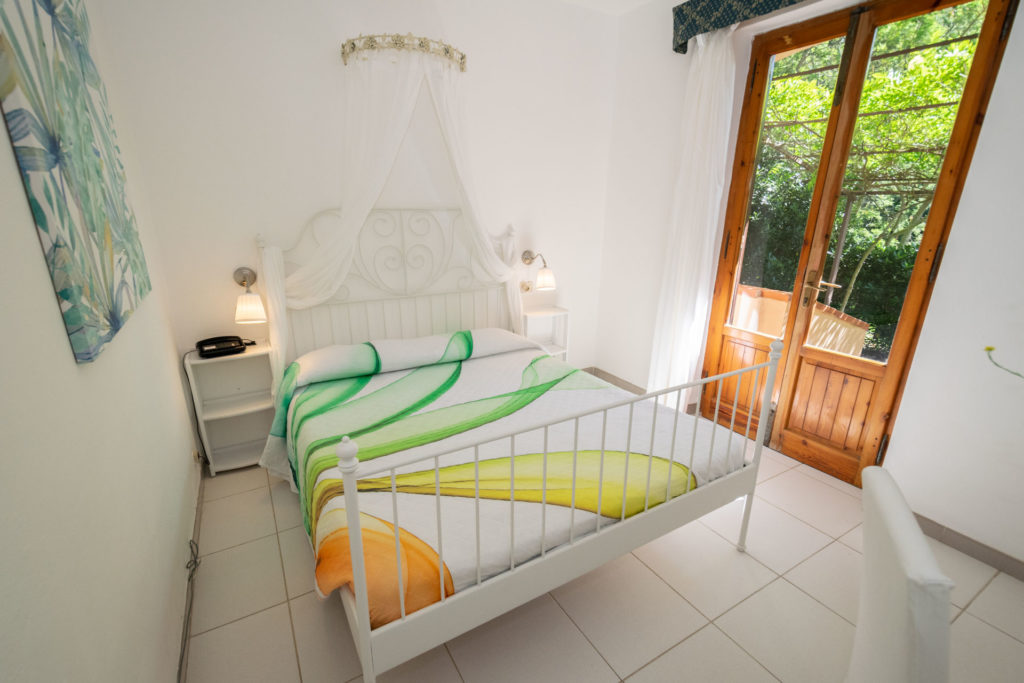
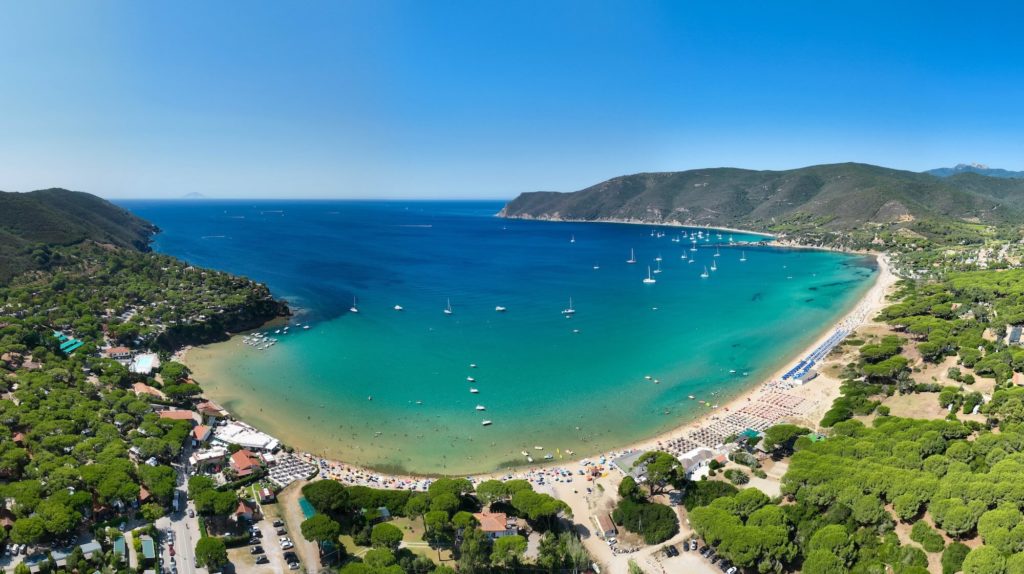
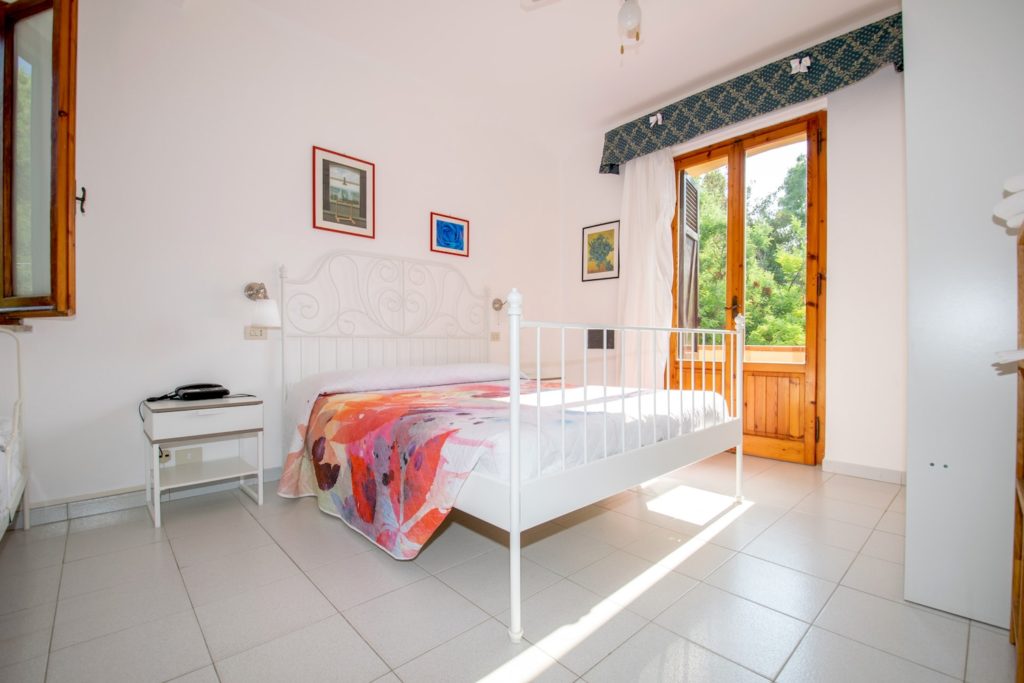
An oasis of tranquillity in the pine forest
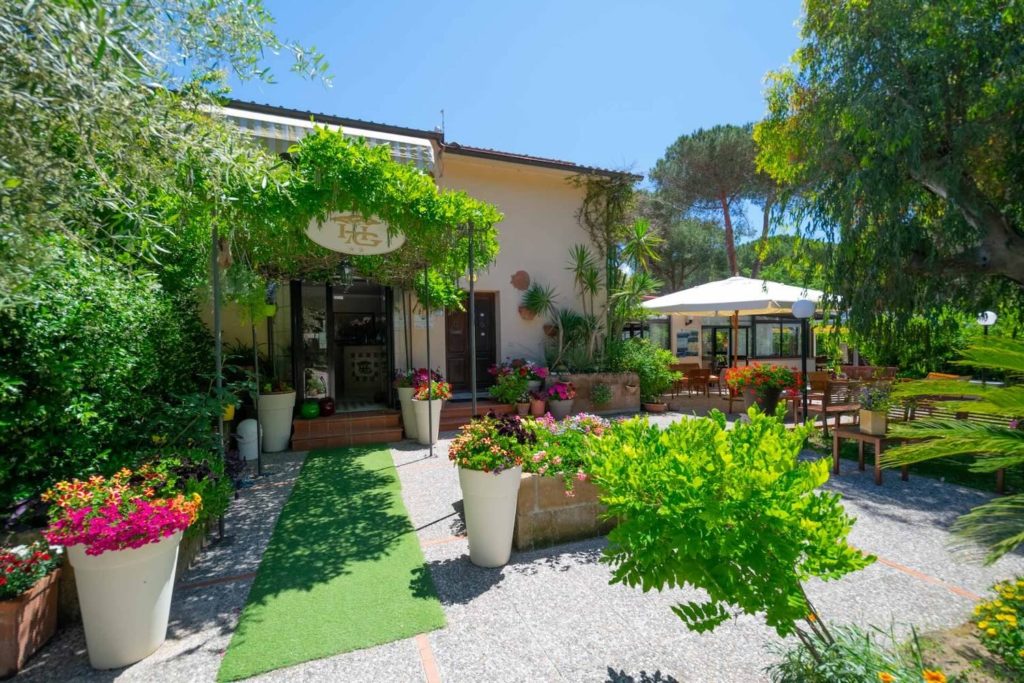
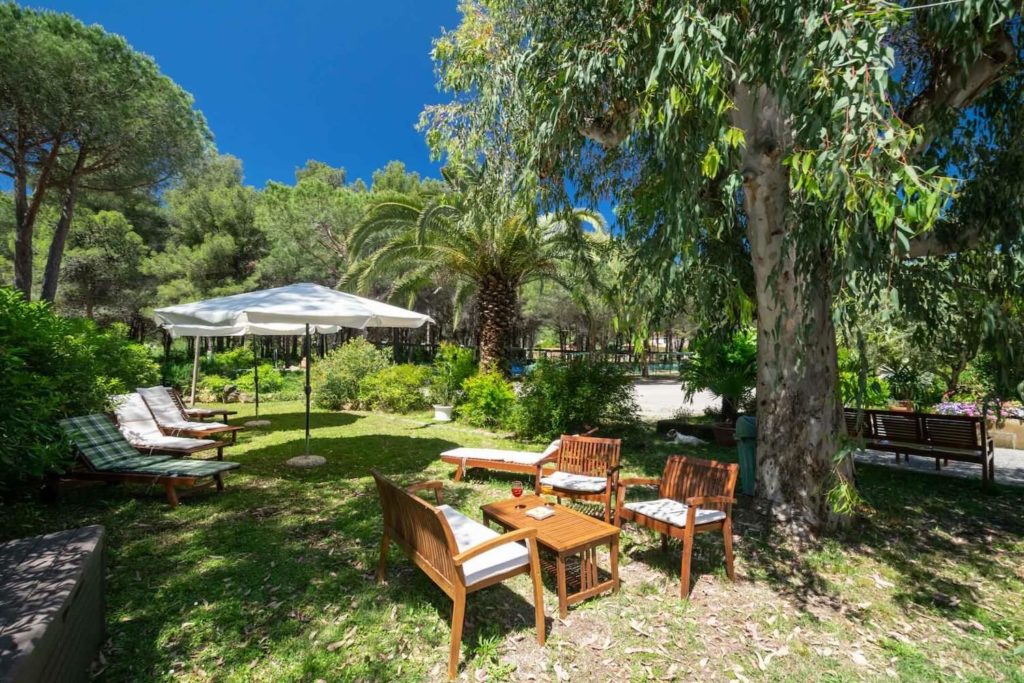
Hotel Giardino is a family‑run hotel facing the centre of the Gulf of Lacona. It is immersed in a 30 000 m² pine park, part of a large forest that provides shade and the scent of resin and offers the chance to relax among ancient trees . This privileged location creates an oasis of peace while remaining less than 100 m from the sandy Lacona beach . A short five‑minute path leads directly from the hotel to the sea, leaving your car in the numbered private car park included for every room .
Family philosophy and the comfort of the rooms
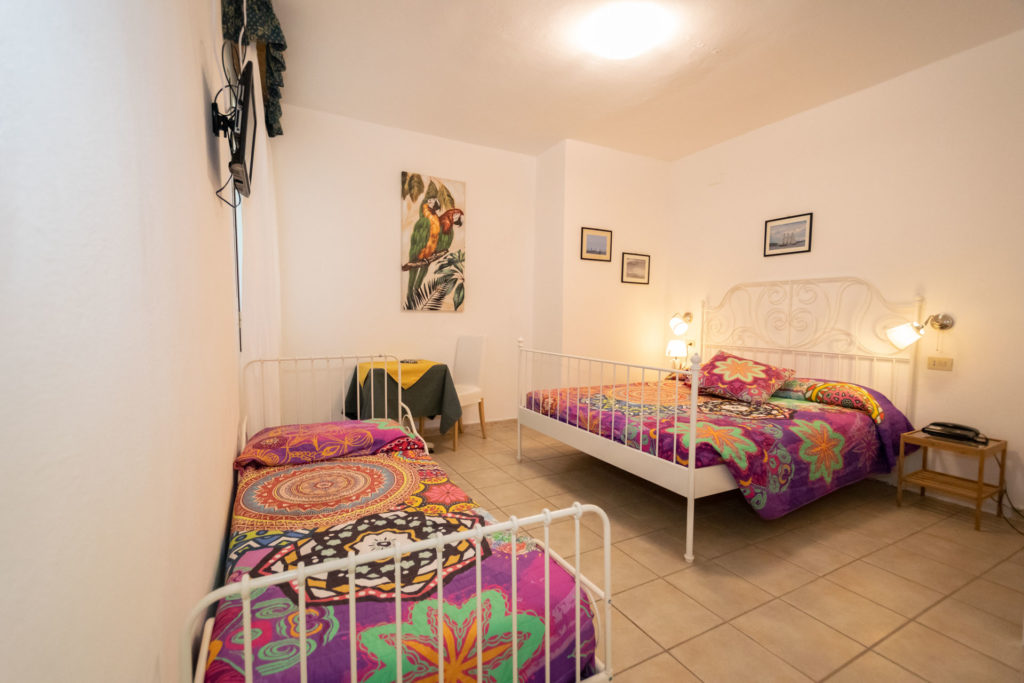
Managed by the same family for generations, Hotel Giardino welcomes its guests with a warm, informal atmosphere where Tuscan hospitality blends with respect for the environment . The rooms are spread over three separate units within the park and provide simple yet functional accommodation . Each room is equipped with air‑conditioning, flat‑screen TV, a private bathroom with shower and hairdryer and a safe . Many rooms have an independent entrance with direct access to the garden, others have a balcony or private patio; a few include a small exclusive garden . Guests praise the care taken with daily cleaning and the recently refurbished bathrooms, which are spacious and comfortable . Air conditioning ensures a restful sleep even on the hottest days, and free Wi‑Fi is available in rooms and common areas .
Services and common areas
The hotel offers a range of services designed for the relaxation of the whole family:
- Free Wi‑Fi in rooms and common areas .
- Numbered private parking inside the park .
- Restaurant serving simple but tasty dishes of Tuscan tradition; buffet breakfast enriched with local specialities introduces guests to Elban flavours .
- Barbecue area for outdoor dinners .
- Hotel bar for aperitifs or coffee .
- Play areas, including a small playground, table football and table tennis .
- Bike rental and sports equipment; the hotel caters to sport lovers by offering bicycle rental and possibilities for golf, diving, snorkelling and ping‑pong .
- Pet‑friendly services; four‑legged friends are welcome – please enquire about the type of room and availability .
One of the hotel’s strengths is its staff: guests constantly appreciate the kindness and friendliness of the team, which creates a family‑like atmosphere and is available for advice and bookings .
A strategic location
The hotel is located on the south coast of Elba in the municipality of Capoliveri, between Marina di Campo and Portoferraio . This central position allows you to reach the island’s main towns and most beautiful beaches in a short time . The area of Lacona is peaceful, surrounded by hills and pine forests yet close to services . In just fifteen minutes by car you can visit other spectacular beaches and places of interest .
Lacona beach, one of the island’s largest, is known for its golden sand and crystal‑clear water . Behind it lies a unique habitat: coastal dunes covered with sea lily (Pancratium maritimum) and yellow poppy – rare ecosystems on Elba . The beach is accessible thanks to bathing establishments, bars, restaurants and sailing schools . From the hotel you can also walk to the small cove of Laconella and to the Capo Stella headland with stunning views over the Gulfs of Lacona and Stella .
Agreements and ferries
Elba is easily reached by ferries from the port of Piombino to Portoferraio, Rio Marina and Cavo. Thanks to our agreements we can offer discounted ferry fares and special benefits reserved for our guests; contact us for a personalised quote .
Frequently Asked Questions about your stay
What are the check‑in and check‑out times?
Check‑in is available from 14:00. On departure day, please vacate the room by 10:00 to allow cleaning and sanitising .
Does the hotel provide parking?
Yes. Each room has a numbered parking space inside the park. The car park is free and allows you to leave your car safely while you enjoy the beach or explore the island .
Are pets accepted?
We are a pet‑friendly property and gladly welcome pets; please inform us at the time of booking as particular conditions may apply depending on the type of room and availability .
Is there a swimming pool?
No; there is no swimming pool, but the sea is just a short walk away and Lacona beach offers clear and safe waters even for small children .
Do the rooms have air conditioning and Wi‑Fi?
Yes. All rooms are air‑conditioned and have free Wi‑Fi. The connection is free in communal areas and rooms, and the hotel provides charging points and computer stations for guests .
What services are included in the stay?
In addition to the overnight stay, the rate includes:
- Buffet breakfast with local products ;
- Parking and access to the barbecue area ;
- Wi‑Fi and use of the play areas (playground, table tennis, table football) ;
- Daily cleaning service ;
- Assistance with booking ferries at discounted rates .
Other services available for a supplement include lunch and dinner at the restaurant, bicycle rental, boat excursions and wine tastings .
Does the hotel have a restaurant?
Yes. Our in‑house restaurant offers dishes of Elban and Tuscan tradition, focusing on local ingredients. Guests appreciate the excellent quality and variety of our cuisine, which includes fresh fish, meat, vegetables from our garden and homemade desserts . An à la carte menu is available. For quick lunches or aperitifs you can visit the bar .
Are there facilities for children?
We have a equipped playground, table football and table tennis for our younger guests . On request we can provide high chairs, cots and bottle warmers. The tranquil environment and proximity to the beach make the hotel ideal for families .
What sports activities can I practise in the area?
Thanks to our central location, the hotel is a perfect starting point for numerous sports activities. We offer bicycle rental and are close to trails for trekking and mountain biking. Nearby sports include golf, scuba diving, snorkelling and ping‑pong . The hotel park provides shaded areas for yoga and outdoor activities.
Can I organise excursions or guided tours from the hotel?
Our staff is available to suggest customised itineraries and organise boat trips, museum visits and hiking routes . We collaborate with local guides and navigation companies to help you discover the island’s secrets.
Discovering Elba starting from Lacona
Elba surprises with its landscape variety: within a few kilometres you can pass from granite cliffs to long sandy beaches, from fishing villages to vineyards on the hills . The following sections propose an itinerary that starts from Lacona and touches the most characteristic centres of the island, enriched with frequently asked questions and summary tables .
Capoliveri – a medieval village on Monte Calamita
The town and its history. Capoliveri rises 167 m above sea level on the ridge of Monte Calamita . Its origins date back to Roman times, when it was known as Caput Liberum and associated with the cult of Bacchus. Today it is one of the island’s most fascinating centres: a medieval village of narrow vaulted alleys (chiassi), craft workshops and welcoming bars . Walking through the centre you encounter the remains of the Church of San Michele, where Pope Gregory XI celebrated Mass in 1376, and the Alfeo Ricci Museum of Elban Minerals, which displays rare gems such as the prase quartz .
Dream beaches. Capoliveri is renowned for its numerous beaches. Entirely sandy beaches include Barabarca, Calanova, Felciaio, Ferrato, Lacona, Lido, Morcone, Naregno, Norsi, Pareti, Straccoligno and Zuccale . Other beaches, such as Madonna delle Grazie, Margidore and Remaiolo, mix sand and pebbles . A table later in this guide summarises the key features of these bays.
Culture and nature. Nearby you can visit the Sanctuary of the Madonna delle Grazie and the Spanish Forte Focardo, built in the 17th century . For lovers of legends we recommend an excursion on Monte Calamita (413 m); the peninsula is rich in magnetite and popular folklore tells that sailors’ compasses malfunctioned near Punta Calamita . Every October the Grape Festival (Festa dell’Uva) takes place, while in July the Festival of the Innamorata celebrates an ancient love legend with a historical parade and competitions between the town’s districts . Mountain bikers can take part in the Capoliveri Legend Cup, a race across the scenic trails of Monte Calamita .
Portoferraio – the island’s capital
History and fortifications. Portoferraio lies on the north‑eastern coast and is the capital and main port of Elba. Its origins go back to ancient times: Ligurians, Etruscans and Greeks settled here before the Romans, who named it Fabricia . In 1548 Cosimo I de’ Medici transformed the village into the fortress of Cosmopoli, building a defensive system composed of the Falcone, Stella and Linguella forts linked by powerful walls that still protect the city .
Napoleon and the museums. Portoferraio is also associated with Napoleon Bonaparte, who lived here in exile from 4 May 1814 to 26 February 1815. His residences – Palazzina dei Mulini in town and Villa San Martino in the countryside – can be visited . Don’t miss the Foresian Art Gallery, which houses a collection of artworks donated by Dr. Mario Foresi, and the Archaeological Museum at Linguella, displaying artefacts from the late 8th century BC to the 5th century AD . Nearby are the remains of the Roman Villa of Linguella and, across the bay, the Roman Villa delle Grotte .
Porto Azzurro – fishermen and Spanish history
Located in the centre of the Gulf of Mola, Porto Azzurro is a charming fishing village whose current name dates from 1947 when the original “Porto Longone” was replaced . Its sheltered position has made it a safe harbour for ferries and tourist boats . The symbol of the village is the San Giacomo Fortress (also known as Fort Longone), built in 1603 with a star‑shaped plan; it currently houses a prison but some sections are open to visitors . The village spreads at the foot of the fortress with lively Piazza Matteotti lined with shops and restaurants . Wandering through the lanes you encounter the Madonna del Carmine Church and the Sacred Heart Chapel from the 18th century . Nearby attractions include the Piccola Miniera, a reconstructed mine visited by little train, and the Sanctuary of Madonna del Monserrato . Local beaches include Barbarossa, Reale and Rossa with sand, Terranera with pebbles, and Pianotta where sand alternates with rocks .
Campo nell’Elba – between sea and ancient villages
The municipality of Campo nell’Elba occupies the island’s southern and flattest part, stretching from the Gulf of Lacona to Pomonte . Here, within a few kilometres, you can alternate the lively coast – with localities such as Marina di Campo – with the tranquillity of the hillside villages San Piero and Sant’Ilario . This area also includes the Island of Pianosa .
Marina di Campo, once a fishing village, is known today for its vast sandy bay, the longest beach on the island . On the west point stands a cylindrical Pisan tower 25 m high which is now a lighthouse . The beach is appreciated for its golden sand, gentle seabed and shady pine forest , making it ideal for families. Nearby you can visit the sandy beaches of Fetovaia and Galenzana, the pebbly coves of Colle Palombaia and Fonza, and the mixed beaches of Cavoli and Seccheto, where sand, rocks and pebbles alternate . Climbing towards the villages you reach Sant’Ilario and San Piero, characterised by Romanesque churches such as the Pieve di San Giovanni and ancient towers; along the road you find the San Giovanni Tower and the Butterfly Sanctuary .
Marciana – the island’s oldest village
Marciana is a medieval hill village on the slopes of Monte Capanne on the island’s western side . Founded in 35 BC, it is one of the oldest settlements in the archipelago . During the Appiani rule (14th–16th centuries) it flourished; the Pisan Fortress with its four towers and the civic buildings that housed the mint and foundry are testimony . From the fortress you enjoy panoramic views of Monte Capanne (1019 m) and the coast . Notable churches include the Romanesque Pieve of San Lorenzo, destroyed by the Turks in 1554, and the Church of San Cerbone, built in honour of the saint who sheltered here in the 6th century . The Civic Archaeological Museum in the Palazzo del Pretorio conserves finds from prehistory to the Villanovan culture .
Marciana Marina – the “little Marseilles”
Separated from Marciana only in 1884, Marciana Marina is the smallest municipality on the island . The village develops along a narrow coastal strip enclosing a bay; behind it rise Monte Giove and Monte Perone, creating a scenic backdrop . In the past Marciana Marina was an important commercial port, earning the nickname “Little Marseilles” . Today the ancient harbour is popular with sailors. Highlights include the 16th‑century Appiani Tower, the Church of Santa Chiara, and elegant 19th‑century villas along the promenade such as Villa Anselmi, Villa Leonardi and Palazzo Fossi . The picturesque Cotone quarter, the original settlement, still preserves the Etruscan imprint in its name .
Rio – mines and castles between hills and sea
The young municipality of Rio, created in 2018 from the union of Rio Marina and Rio nell’Elba, encompasses hills scented with Mediterranean scrub and the crystal waters of the eastern coast . The area is famous for its long tradition of iron mining, begun by the Etruscans and continued to modern times; the red‑coloured hills testify to the ancient mines . To learn more about mining history you can visit the Archaeological Museum of the Mining District in Rio nell’Elba and the Minerals and Mining Art Museum in Rio Marina . The latter exhibits minerals and faithful reconstructions of mining environments . Beyond industrial heritage, the municipality offers monuments such as the Church of San Rocco, an oratory from 1570, and the Port Tower, a watchtower erected in 1534 . Near the historic centre of Rio nell’Elba you find the 16th‑century public washhouses fed by the Canali spring . A recommended hike leads to the Castle of Volterraio, an 11th‑century Pisan fort overlooking the bay of Portoferraio .
Beaches and coves not to miss
Beaches are among the main attractions of Elba. In Capoliveri and elsewhere you will find sandy strands, hidden coves and wild coastline. The table below summarises the key characteristics of the most notable beaches, all reachable by car or scooter from Hotel Giardino .
| Beach (Municipality) | Features & services | Natural notes |
|---|---|---|
| Lacona & Laconella (Capoliveri) | Very fine sand; services: parking, bathing establishment, bar, restaurants, boat rental, sailing, scuba and windsurf schools | Preserve the island’s last dunes with yellow poppy and sea lily |
| Barabarca (Capoliveri) | Rocks and sand; parking | Surrounded by isolated vegetation |
| Cala dell’Innamorata (Capoliveri) | Pebbles and sand; services: parking, bathing establishment, boat rental, scuba and windsurf school | 300 m of sand, clear water; access to the Gemini Islands with rich marine fauna |
| Felciaio (Capoliveri) | Rocks and sand; parking | Secluded cove with sand and gravel |
| Lido di Capoliveri (Capoliveri) | Sand; services: parking, bathing establishment, boat rental, sailing, windsurf and scuba schools | Wide, well‑organised beach even in high season |
| Madonna delle Grazie (Capoliveri) | Pebbles and sand; services: parking, bar | Small beach with inlets and rocks |
| Margidore (Capoliveri) | Pebbles and sand; services: parking, bathing establishment, boat rental, scuba, windsurf school, mooring pontoon | Dark sand mixed with polished pebbles; quiet location |
| Morcone (Capoliveri) | Sand; services: parking, bathing establishment, boat rental, windsurf, scuba and sailing schools | Lush bay ideal for diving |
| Naregno (Capoliveri) | Sand; services: parking, bathing establishment, boat rental, windsurf and sailing schools, mooring pier | 500‑m beach dominated by Forte Focardo with views over the Bay of Mola and Porto Azzurro |
| Norsi (Capoliveri) | Pebbles and sand; services: parking, bar | Famous for its black sand and transparent waters |
| Pareti (Capoliveri) | Rocks, sand and pebbles; services: parking, bathing establishment, scuba and sailing school | View over Capo Stella; famous for the dives of freediver Jacques Mayol |
| Straccoligno (Capoliveri) | Sand; services: parking, bathing establishment, boat rental | Beach surrounded by Mediterranean scrub between Capo Perla and Liscolino |
| Zuccale (Capoliveri) | Rocks and sand; parking | Cove surrounded by lush vegetation |
Experiences in nature
Elba is not just about the sea: the inland and hills offer hiking routes and breathtaking panoramas. Here are some suggestions to try during your stay .
Excursion to Capo Stella
The Capo Stella promontory separates the Gulfs of Lacona and Stella. A scenic loop trail of about 6.6 km (184 m elevation gain) lets you circle the peninsula in roughly two hours . The walk crosses Mediterranean scrub and offers numerous viewpoints: the highest point, Monte Capo Stella, reaches 141 m, while the lowest is 5 m above sea level . The trail is easy and can be walked year‑round; wear hiking shoes and take care on wet ground . From Hotel Giardino you can reach the trailhead on foot in minutes .
Ascent of Monte Capanne
At 1 019 m, Monte Capanne is the highest peak in the Tuscan Archipelago and offers a 360‑degree view of Elba and neighbouring islands . The easiest way to reach the summit is from Marciana, where a yellow cable car takes you close to the top; alternatively you can hike the CAI 101 trail through chestnut woods and granite outcrops . From the summit the panorama stretches from Pianosa to Corsica . The visit can be combined with the historical tour of Marciana and the archaeological museum .
Trekking and biking on Monte Calamita
The Monte Calamita promontory offers panoramic trails and ancient mines. The magnetite‑rich ground has inspired legends about shipwrecks and wayward compasses . Today the paths are popular with walkers and cyclists; the Capoliveri Bike Park offers routes of varying difficulty, while guided visits reveal abandoned mines and the museum . During the Capoliveri Legend Cup the best bikers race along these trails .
Trip to Pianosa and other islands in the park
From the port of Marina di Campo there are daily excursions to Pianosa, a small gem with prison history and unspoilt beaches . Day trips also visit other islands of the Tuscan Archipelago National Park – Capraia, Giglio and Montecristo – allowing you to appreciate protected marine environments and snorkel in crystal waters .
Art, history and museums
Elba’s cultural richness is demonstrated by museums, fortresses and archaeological sites spanning from the Neolithic to the modern era .
Medicean fortifications of Portoferraio
Portoferraio’s defensive system includes three forts – Falcone, Stella and Linguella – connected by walls and walkways built from 1548 . Designed by architects Bellucci, Camerini and Buontalenti on the orders of Cosimo I de’ Medici, the impressive complex responded to the need to defend the island from sea attacks . From Forte Falcone there is a wonderful view of the Piombino channel , and the fortress hosts exhibitions and temporary displays .
Napoleonic villas
The two residences of Napoleon Bonaparte on Elba are essential to understand his period of exile. Palazzina dei Mulini, on the headland at Portoferraio, was his main residence and preserves period furnishings, memorabilia and terraced gardens. Villa San Martino, set in the countryside a few kilometres away, served as his summer home; both villas are open to the public and host exhibitions dedicated to Napoleon .
Forte Focardo and Spanish fortresses
On the headland closing the Bay of Mola stands Forte Focardo, built by the Spanish in the 17th century . Its strategic position allowed control of two stretches of sea and protection of nearby Porto Azzurro. Not far away is the San Giacomo Fortress (also known as Fort Longone), built in 1603 with a star‑shaped plan . Although today it houses a prison, part of the fortress can be visited with guided tours .
Churches and sanctuaries
Among the most significant religious sites are the Sanctuary of the Madonna delle Grazie, which houses Marcello Venusti’s painting Madonna del Silenzio ; the Madonna della Neve Church in Lacona, built in the 16th century by monks from the Abbey of Vallombrosa ; the San Lorenzo Church and San Cerbone Church at Marciana ; the Santa Chiara Church at Marciana Marina ; and San Rocco Church at Rio Marina .
Mining and archaeological museums
Elba’s mining importance is testified by several museums. In Rio nell’Elba the Archaeological Museum of the Mining District displays finds and minerals illustrating the evolution of iron extraction from Etruscan times to the present . In Rio Marina the Minerals and Mining Art Museum exhibits Elban minerals and reconstructions of mining tunnels . In Marciana the Civic Archaeological Museum preserves prehistoric, Etruscan and Roman artefacts and materials from shipwrecks .
Maritime museums and maritime traditions
In Capoliveri the Sea Museum tells the story of the Polluce shipwreck through recovered objects – cabin sets, jewellery, coins and furnishings – and is complemented by the Alfeo Ricci Mineral Museum displaying beautiful gems . At Marciana Marina, maritime tradition is tied to tuna fishing: the village houses one of the last active tuna traps and still remembers the historic mattanza (tuna massacre) .
Events, traditions and gastronomy
Elba’s culture is expressed through festivals, legends and flavours. Here are some unmissable events and specialities during your holiday .
Grape Festival and Festival of the Innamorata in Capoliveri
In October Capoliveri divides into four districts (Fosso, Torre, Fortezza and Baluardo) that compete during the Grape Festival, with costume parades, floats and tastings celebrating the wine tradition . On 14 July the Festival of the Innamorata takes place: a historical procession winds through the village to the beach of Innamorata, where crews compete to commemorate a love legend .
Legends of Monte Calamita
Monte Calamita is shrouded in legend: according to local stories, the magnetite attracted the metal parts of ships, causing shipwrecks . Today, although such tales are evocative, excursions on the promontory allow you to observe magnetic phenomena that alter compasses while listening to stories of miners, pirates and hidden treasures .
Food and wine: wines and traditional dishes
Elban cuisine blends rustic tradition and sea produce. Dishes to try include cacciucco (fish soup), gurguglione (vegetable ratatouille), sbrinciolato (dry biscuit) and sweet schiaccas . The hotel’s cuisine reproduces some of these recipes, pairing them with local wines such as Aleatico and Moscato di Capoliveri, an aromatic golden wine appreciated for centuries . Take advantage of the à la carte menu to enjoy specialities based on fresh fish and meat from Tuscan farms .
Recommended itineraries and practical tips
To make the most of your stay at Hotel Giardino, we propose several one‑day itineraries combining nature, culture and relaxation. Each itinerary starts from our hotel and comfortably returns by evening .
Itinerary 1: Lacona – Capo Stella – Capoliveri
- Morning: start at Lacona beach for a swim in the crystal‑clear water and a stroll through the dunes. For the more active, we recommend the loop hike on Capo Stella .
- Lunch: return to the hotel to enjoy our cuisine or have a picnic in the park; you can use the barbecue area .
- Afternoon: visit Capoliveri to discover the medieval alleys, craft shops and Mineral Museum; finish by relaxing on nearby beaches such as Barabarca or Felciaio .
Itinerary 2: Portoferraio – Viticcio – Villa dei Mulini
- Morning: drive to Portoferraio (15 minutes). Visit the Medici fortifications and Napoleonic museums .
- Lunch: taste local cuisine in a trattoria in Portoferraio, then move on to the Viticcio or Sansone beach for a swim .
- Afternoon: focus on culture: Palazzina dei Mulini and the Foresian Art Gallery; on the return to Lacona stop at the Volterraio viewpoint to admire the bay .
Itinerary 3: Marina di Campo – Sant’Ilario – San Piero
- Morning: head to Marina di Campo for a walk along the seafront and a visit to the Pisan tower; enjoy the island’s longest beach .
- Lunch: taste fish dishes in one of the harbour restaurants .
- Afternoon: climb to the villages of Sant’Ilario and San Piero to visit the Pieve di San Giovanni and the San Giovanni Tower; on the way back stop at the Butterfly Sanctuary .
Itinerary 4: Marciana – Monte Capanne – Marciana Marina
- Morning: depart for Marciana and take the cable car up Monte Capanne; admire the panoramic view and visit the Pisan Fortress .
- Lunch: dine in a Marciana restaurant, sampling chestnut or mushroom specialities .
- Afternoon: descend to Marciana Marina for a stroll through the village and a visit to the Appiani Tower and the Cotone quarter .
Itinerary 5: Rio – Mining Park – Porto Azzurro
- Morning: reach Rio Marina to visit the Minerals and Mining Art Museum and the archaeological museum in Rio nell’Elba; continue with a visit to the old mines in the Elba Mining Park .
- Lunch: stop at a farmhouse to enjoy dishes made with garden products and local wine .
- Afternoon: move to Porto Azzurro to visit the San Giacomo Fortress and stroll through the piazza; end the day with a swim at Barbarossa beach .
Practical tips
- Best time to visit: Elba enjoys a mild climate; the best seasons are spring (April–June) and autumn (September–October), when temperatures are pleasant and tourist numbers lower . Summer is busier, but staying in Lacona you can rely on wide beaches and green areas . In winter many facilities are closed, but the island has a wild and silent charm .
- Getting around: It is advisable to arrive with your own car or rent one to explore the island comfortably. Alternatively you can rent scooters and bicycles. Public transport links the main centres, but services are reduced outside the high season . The hotel offers bicycle rental and information on bus routes .
- Beach access: Many beaches have car parks; in some cases access is paid or reserved for bathing establishments. Check before you go and carry cash. Remember to respect the environment: do not collect sand or protected flowers such as the sea lily .
- Hiking: For trekking routes wear appropriate footwear, hat, sun cream and carry water. Always check the length and elevation of the trail (for example the Capo Stella loop is 6.6 km with 184 m ascent). In summer set off early to avoid heat .
- Reservations: In high season it is advisable to book ferries and restaurants in advance. Thanks to our agreements with ferry companies you can take advantage of special rates .
Conclusion
We hope this guide has provided all the information you need to plan your holiday on Elba. Hotel Giardino in Lacona looks forward to welcoming you with its family atmosphere, large shaded park, traditional cuisine and strategic position between sea and hills . Whether you love the beach, hiking, history or good food, Elba offers surprises and unforgettable moments . We look forward to meeting you and letting you experience the island as we live it: with passion, respect for nature and love for our land.