

Introduction
The island of Elba, a small world in the Tyrrhenian Sea, has more than 100 kilometres of coastline where sandy beaches, rocky headlands and white‑gravel coves alternate. This diversity reflects a complex geological history in which magmatic intrusions, metamorphic rocks and ancient iron mines have shaped the landscape . Over millennia the sea and wind have carved numerous sea caves into the granite cliffs and carved inland caves that testify to centuries of religious and mining history . Elba’s caves can be visited only by boat or on foot and offer a unique blend of geology, legends and natural beauty. This guide, prepared by the staff of Hotel Giardino in Lacona, describes the island’s most suggestive caves and explains why their hotel is the ideal base for such an adventure .
Our commitment to responsible tourism
Marine caves are delicate ecosystems. A careless paddle or jump can damage underwater flora and fauna. For this reason Hotel Giardino collaborates with certified environmental guides and promotes excursions by kayak and boat that follow strict rules: do not touch rock formations, avoid littering and respect wildlife . Guides provide geological and biological information and encourage visitors to explore safely .
Hotel Giardino: Your Base for Exploring the Caves
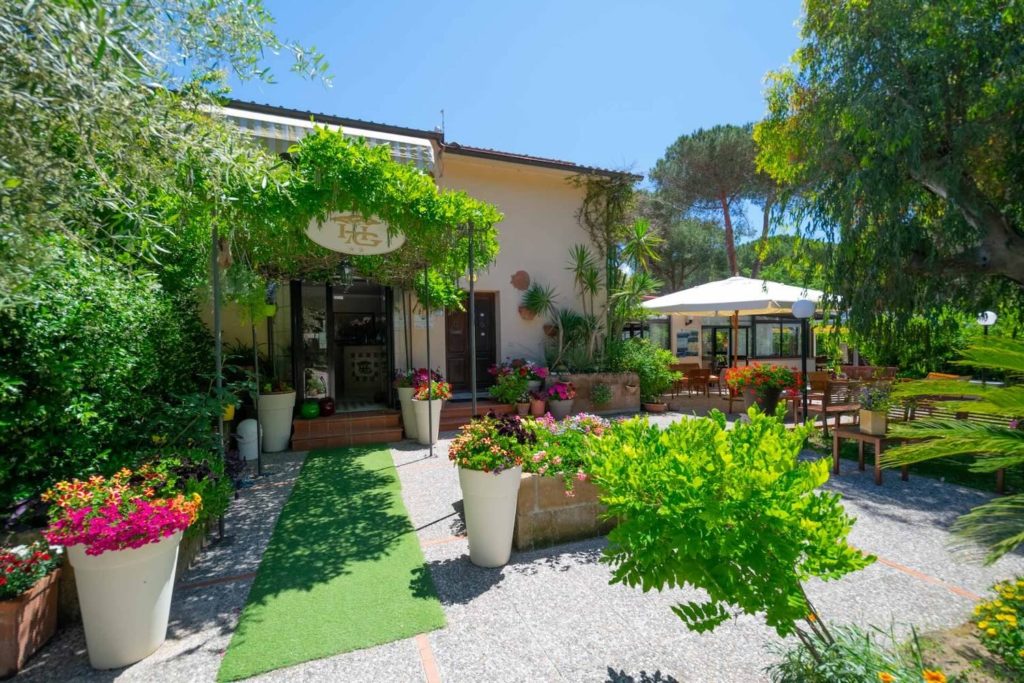
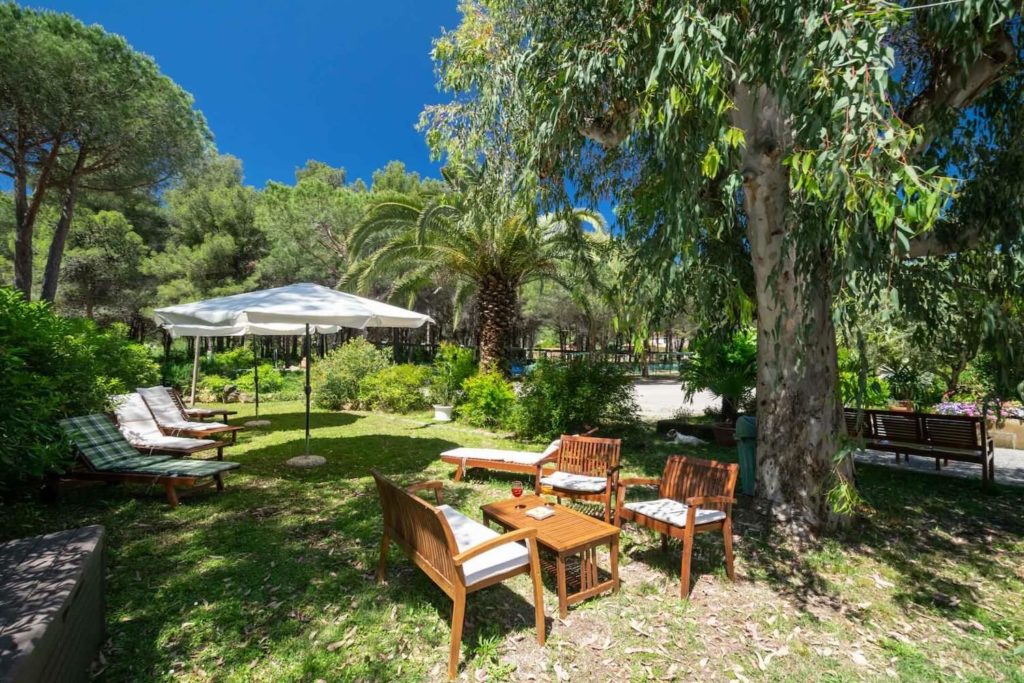
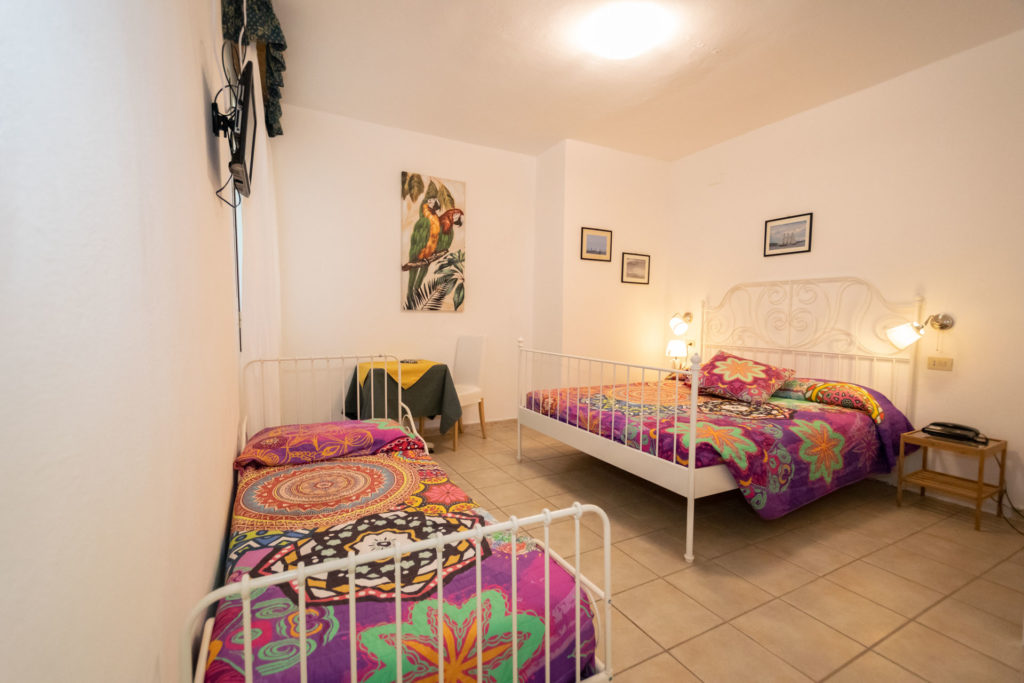
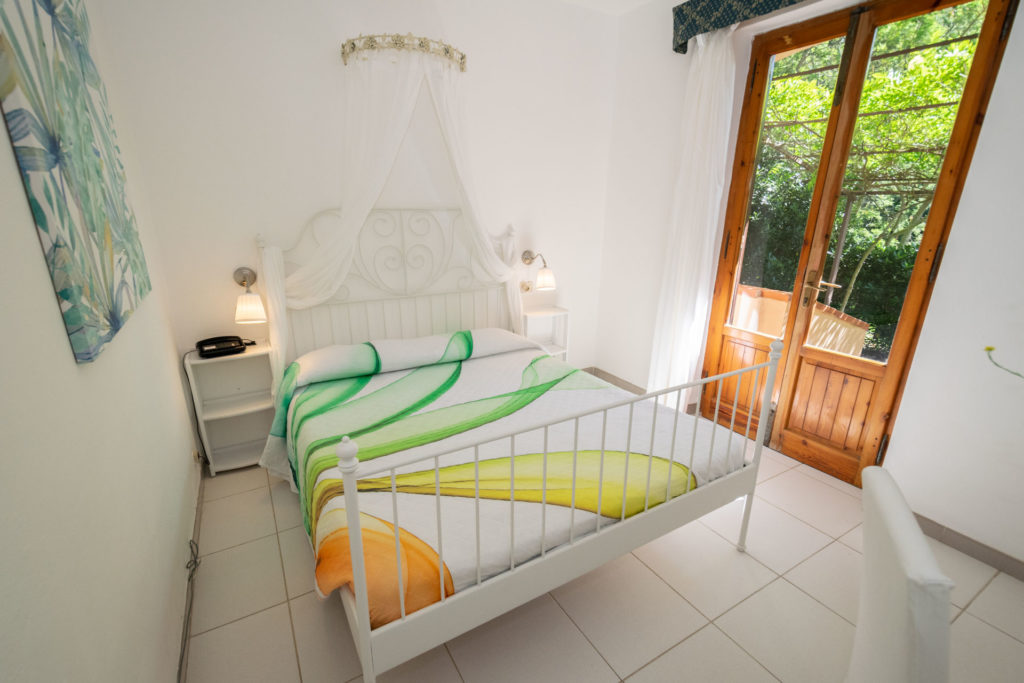
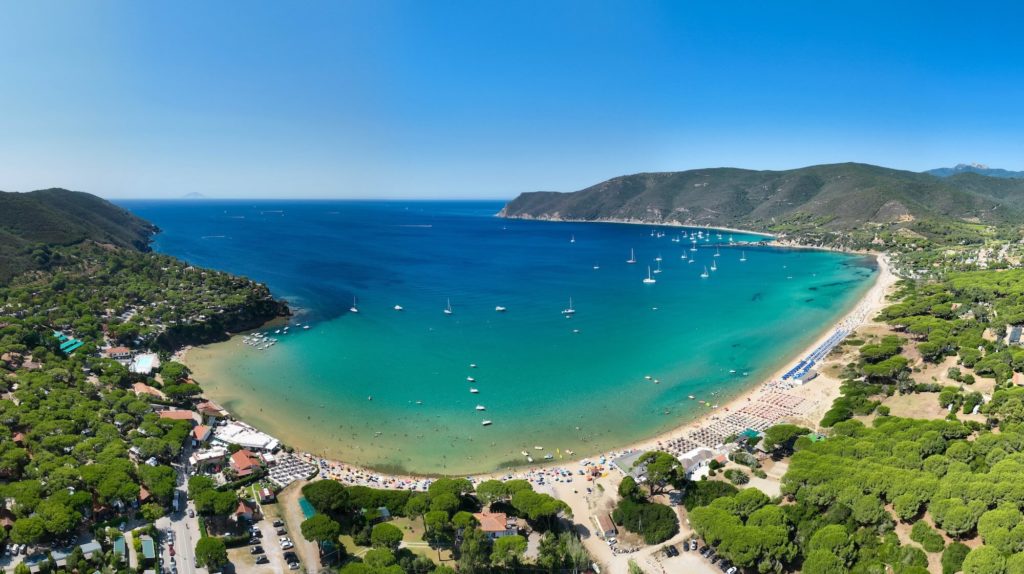
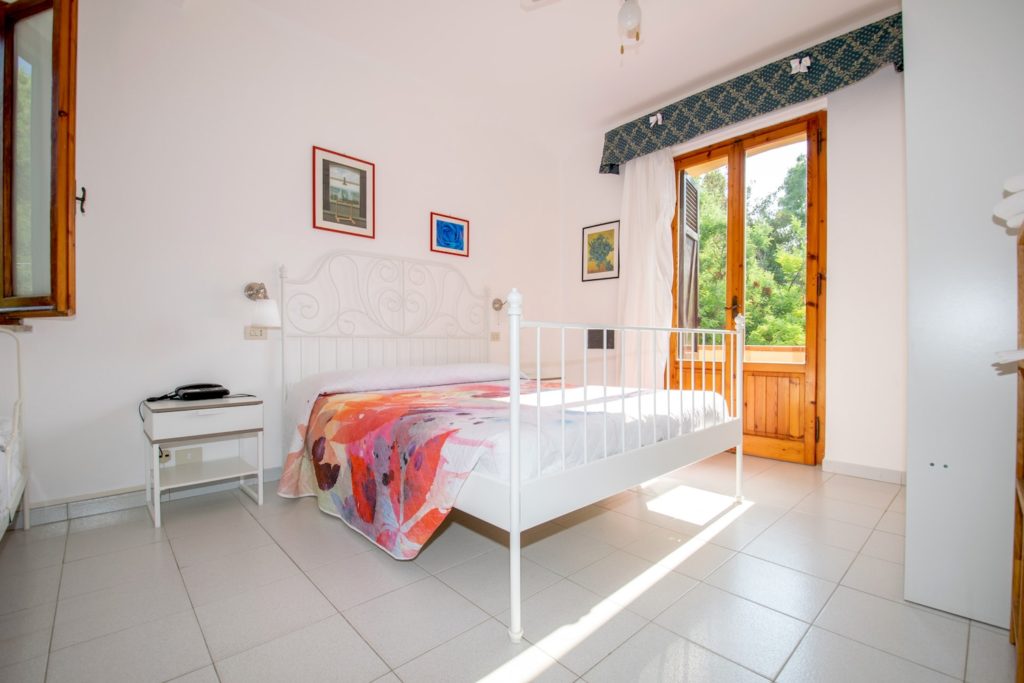
A family‑run hotel in a pine forest
Hotel Giardino is a 3‑star family‑run hotel immersed in a 30 000 m² pine park in the Gulf of Lacona. It has separate buildings and offers:
- Rooms with modern comforts – flat‑screen TV, Wi‑Fi and safe; many have a balcony, patio or small private garden and air conditioning . Each room has a numbered parking space inside the park .
- Playground and outdoor facilities – children’s playground, ping‑pong tables and bocce field; guests can walk among the pines, relax in the shade or use the barbecues .
- Services for active travellers – covered bike storage and agreements with local rental agencies; ferry ticket discounts; assistance for booking diving and snorkelling excursions; pet‑friendly policy .
A summary table of services is shown below:
| Service | Description |
|---|---|
| Location | Gulf of Lacona, Capoliveri, set in a 30 000 m² park a few steps from Lacona Beach |
| Parking | Free numbered parking space for each room within the park |
| Rooms | Flat‑screen TV, Wi‑Fi, safe, balcony or patio; some with garden and air conditioning |
| Catering | Home‑style cooking with simple, tasty dishes; menus for children and special dietary needs |
| Activities & services | Playground, bocce field, ping‑pong, barbecue; bicycle storage; agreements with diving/snorkelling centres; ferry discounts |
| Pet‑friendly | Pets are welcome |
A strategic starting point
Thanks to its central position, Hotel Giardino allows you to reach towns such as Portoferraio, Capoliveri, Porto Azzurro and Marina di Campo in less than half an hour . Lacona Beach, one of Elba’s longest sandy beaches, is just 100 m away . The hotel organizes evening meetings with marine biologists and geologists to explain cave formation and prepare guests for their excursions .
Introductory FAQs on Exploring the Caves
When is the best time to visit the sea caves? Boat and kayak excursions are offered mainly from April to October when weather conditions are stable . Operators require a minimum of six participants and tours last about four hours . During low season (April, May and late September) the light creates particularly vivid reflections inside the caves .
Do I need to know how to swim? Most tours are classified as easy and do not require swimming skills . Guides provide assistance for snorkelling stops and participants may remain on board .
What equipment do I need? Tour prices include a snorkelling kit (mask and snorkel), snacks and drinks . Bring a beach towel, sunscreen, sunglasses and a hat; underwater cameras are optional .
How do booking and cancellations work? Bookings are made on operator websites; a credit card is required for pre‑authorisation and payment is charged only after confirmation . In case of bad weather, guides suggest alternative dates or refund the full amount; cancellation is free up to eight days before and 50 % is refunded if cancelled 7–5 days before .
Safety rules: Tours use 10 m boats with shaded areas and tables but no toilets; pets are not allowed . Arrive early at meeting points (Margidore port in Lacona or Marina di Campo) because parking is limited . Listen to the guide, wear life jackets if provided and do not jump near rocks .
Geology and History of the Caves
Geological origins
The Tuscan archipelago formed when African and Eurasian plates collided, uplifting and folding rocks . Western Elba consists mainly of granite and gneiss, while the eastern part is made of metamorphic rocks and iron deposits . Marine and wind action sculpted cliffs and cavities: the Blue Cave (Grotta Azzurra) formed by marine corrosion along granite fractures, whereas terrestrial caves on Monte Capanne result from rainwater erosion on limestone and sandstone . Many caves are tafoni—circular or elliptical cavities carved by the combined effect of wind, salt and temperature variations—such as the Sbruffo Cave . Others are man‑made, like the Grottarelle near Cavoli, where granite columns were cut for centuries .
Stories and legends
Elba’s caves are woven into local legends. Grotta di San Cerbone recalls the bishop Cerbone of Populonia who lived as a hermit in a cave on Monte Capanne . Grotta della Madonnina, near the Sanctuary of the Madonna del Monte in Marciana, houses a statuette placed in the 1960s; devotees stop there to pray . Grotta del Bue Marino is named after the Mediterranean monk seal (bue marino) once seen at its entrance . The Villa Romana delle Grotte at Le Grotte near Portoferraio dates to the 1st century BC and features cisterns, mosaics and vaulted rooms .
The Most Beautiful Caves of Elba
Grotta Azzurra
Located on the south‑west coast between Cavoli and Colle Palombaia, Grotta Azzurra is the island’s most famous sea cave. Its narrow entrance leads to a hall illuminated by intense blue light produced by sunlight refracting through the water . The best time to visit is mid‑morning when the sun is high and the sea is calm . Kayaks and pedal boats can be hired from Cavoli beach, or you can join a boat tour from Margidore port that stops at various coves before reaching the cave .
| Aspect | Details |
|---|---|
| Location | South‑west coast between Cavoli and Colle Palombaia |
| Access | Only by sea: kayak, pedal boat or boat tour |
| Highlights | Turquoise water, intense blue reflections, stalactites |
| Recommended tours | Boat trip including Grottina dell’Acqua, Grotta del Vescovo and Grotta Azzurra (about 4 hours) |
| Distance from Hotel Giardino | ~20 km (30 min by car to Marina di Campo plus boat) |
FAQs: Swimming is not required because organised tours enter with the boat; the ideal period is May–September and the best time is 10:00–14:00 . Booking is essential because boats take only about 12 participants .
Grottina dell’Acqua
This small cave near Lacona is the first stop on most boat tours. Hidden among rocks, it is named after an underwater freshwater spring whose bubbles create intriguing patterns . Guides invite visitors to put on masks and observe the algae‑covered rocks and small fish—an ideal place for children thanks to calm, shallow water .
| Aspect | Details |
|---|---|
| Location | South coast of Lacona, close to Margidore port |
| Access | Only by boat; initial stop on tours |
| Highlights | Freshwater spring with bubbles; calm shallow water; great for children |
| Distance from Hotel Giardino | ~2 km (5 min by car to port) |
Grotta del Vescovo
Located at the foot of a cliff between Punta Bardella and Capo Poro, this cave is known for its smooth walls and a legend that a bishop took refuge here during a storm . The entrance is wide enough for small boats or kayaks, and on calm days guides invite participants to swim inside where light filters through upper openings to cast green reflections . Kayak routes along the west coast often include this cave and the nearby Bue Marino Cave .
| Aspect | Details |
|---|---|
| Location | South‑west coast, between Punta Bardella and Capo Poro |
| Access | Boat or kayak; entrance large enough for small craft |
| Highlights | Smooth walls, green reflections, legend of a bishop’s refuge |
| Recommended tours | Boat tours; kayak itineraries along west coast |
| Distance from Hotel Giardino | ~15 km (20 min by car to Marina di Campo) |
Grotta del Bue Marino
Further west lies the deep Grotta del Bue Marino, named after the Mediterranean monk seal. Reports from 1985 mention a seal spotted near the entrance . Today the cave is appreciated for its reflective walls, quiet interior and niches formed by the sea . Kayaks and small boats approach the cave only when the sea is calm, as the entrance can be affected by waves . Inside, water colours shift from green to dark blue; algae and sponges cling to the walls and you might see moray eels or octopus in the crevices .
| Aspect | Details |
|---|---|
| Location | Western coast, beyond Punta Bardella |
| Access | Only by sea; kayak or small boat |
| Highlights | Clear water, colourful reflections, historical presence of monk seals |
| Visit tips | Visit in the morning with calm sea; use mask to observe seabed |
| Distance from Hotel Giardino | ~18 km to Marina di Campo plus 20 min boat |
Grotta dello Sbruffo (Enfola)
On the Enfola promontory north of Portoferraio is the Grotta dello Sbruffo. This funnel‑shaped cave is reached by paddling about 20 minutes from Enfola beach, then swimming inside . Light filters from above, and when the sea is rough a sbruffo—a spray of foam—shoots through an upper hole . The cave is a favourite among photographers; early morning visits offer calm conditions and warm light. The trip can be combined with a walk around WWII bunkers on the promontory .
| Aspect | Details |
|---|---|
| Location | Enfola promontory, about 500 m from the beach |
| Access | Kayak (20 min paddle) then swim |
| Highlights | Funnel shape, overhead light, foam spray during waves |
| Combinations | Visit WWII bunkers; snorkel along the coast |
| Distance from Hotel Giardino | ~18 km (25 min by car to Portoferraio + 10 min to Enfola) |
Grotta di San Cerbone
Hidden in the mountains of Monte Capanne, the Grotta di San Cerbone is associated with the 6th‑century bishop of Populonia who lived as a hermit here . To reach it, take trail 101 from Il Romitorio and walk about 1.5 km with 200 m of elevation . The hermitage nearby is one of Elba’s oldest places of worship . Inside the small cave you can imagine the saint’s simple life; the cave was reopened in 2006 .
| Aspect | Details |
|---|---|
| Location | Monte Capanne valley, 300 m from the Hermitage of San Cerbone |
| Access | Trail 101; 1.5 km walk with 200 m ascent |
| Highlights | Small cave where Saint Cerbone lived; historic pilgrimage site |
| Tips | Combine with visit to hermitage; wear hiking shoes and carry water |
| Distance from Hotel Giardino | ~26 km (40 min by car to Poggio + hike) |
Grottarelle – the ancient granite quarry
A short walk from Cavoli beach on the west coast brings you to Grottarelle, a series of man‑made caves created during the extraction of granite columns . Work halted abruptly—probably due to the 1348 plague—and unfinished columns remain . Visitors can see the partly sculpted columns and marks left by stonecutters who used fig‑wood wedges to split the granite . A shepherd’s hut built into a tafoni shows how the cavities were reused .
| Aspect | Details |
|---|---|
| Location | Cavoli area, south‑west coast |
| Access | Footpath from Cavoli beach |
| Highlights | Unfinished granite columns; evidence of plague; industrial archaeology |
| Tips | Visit in spring or autumn; wear comfortable shoes |
| Distance from Hotel Giardino | ~14 km (25 min by car) |
Complesso Monumentale delle Grotte (Villa Romana)
Not all caves are marine; some reveal refined Roman life. At Le Grotte, 2 km from Portoferraio, lies a 1st‑century BC villa with cisterns, mosaics and semicircular rooms . Excavations revealed a two‑storey structure: the upper floor was a residence with portico and garden, while the lower floor housed cisterns and service rooms . Guided tours explain the site’s history; summer evenings host concerts. Entrance costs €5 (adults) or €3 (children 9–18 and over 70); under‑8s enter free .
| Aspect | Details |
|---|---|
| Location | Le Grotte, near Portoferraio |
| Access | Signposted road between Portoferraio and Porto Azzurro |
| Highlights | Roman villa remains: cisterns, mosaics, semicircular exedras |
| Opening times | Vary by season (spring Fridays and holidays 10–12 & 16–18; summer evenings) |
| Tickets | €5 adult; €3 reduced (ages 9–18 & over 70); under‑8 free |
| Distance from Hotel Giardino | ~10 km (20 min by car) |
Grotta della Madonnina & Santuario della Madonna del Monte
Along the path to the 12th‑century Santuario della Madonna del Monte above Marciana (627 m a.s.l.) stands Grotta della Madonnina . Devotees believe the Virgin rested here; a statuette was placed in 1960 . Nearby rocks shaped by the elements include the “Culata della Madonna”, said to be where she sat . The steep trail features fourteen Stations of the Cross, and from the summit you can view Corsica, Capraia and the Tuscan coast .
| Aspect | Details |
|---|---|
| Location | On the path to the Sanctuary of the Madonna del Monte (Marciana) |
| Access | Steep walk to 627 m elevation |
| Highlights | Devotional cave with Madonna statue; eroded rocks like “Culata della Madonna” |
| Tips | Wear hiking shoes; bring water and a hat |
| Distance from Hotel Giardino | ~35 km (50 min by car + 1 h walk) |
Grotta Infrarossa
Near Fetovaia on the south‑west Costa del Sole lies the Grotta Infrarossa, a natural cave with reddish walls due to iron oxidation . Stalactites and stalagmites form a surreal landscape highlighted by light entering the entrance . Access is mainly by sea: rent a kayak from Fetovaia beach or join a boat excursion . Visit when the sea is calm and winds come from the north or north‑east; avoid southern or western winds that make approach difficult . There is no lifeguard service, so caution is essential .
| Aspect | Details |
|---|---|
| Location | Costa del Sole near Fetovaia |
| Access | By sea: kayak or boat |
| Highlights | Reddish walls, stalactites and stalagmites, dramatic light |
| Tips | Visit with calm sea; avoid south/west winds; area not supervised |
| Distance from Hotel Giardino | ~17 km (30 min by car + 15 min kayak) |
Boat Tours and Mini‑Cruises
Local operators offer various boat tours to discover Elba’s caves and coves . The following table compares the main tours :
| Tour | Duration | Main stops | Included services | Notes |
|---|---|---|---|---|
| Grotta Azzurra & minor caves (Freedome) | ~4 h | Grottina dell’Acqua, Grotta del Vescovo, Grotta Azzurra, Scoglio della Triglia | Environmental guide, snorkelling kit, snacks, drinks | Suitable for families (age 4–12); max 12 participants; April–October |
| Bue Marino & Calamita mines | ~4 h | View Ginevro Mine from the sea, Grotta del Bue Marino, eastern coves | Environmental guide, snorkelling, snacks | Ideal for those interested in mining history |
| Sbruffo & Enfola | ~3 h | Grotta dello Sbruffo, tour of Enfola, WWII bunkers | Guide, snorkelling | Requires good kayaking skills |
| Custom boat tours | Variable | Chosen with operator: Grotta Infrarossa, Pomonte wreck, Scoglietto di Portoferraio | Snorkelling kit, drinks | Possibility to charter a private boat |
Attractions Near Hotel Giardino
Beyond the caves, the island offers many attractions. From Hotel Giardino you can reach:
- Capoliveri – A hill‑top mining village with narrow alleys (chiassi), panoramic squares and the Sea Museum, which exhibits artifacts from the Polluce shipwreck . Nearby, the Calamita mines are open for guided tours and biking .
- Porto Azzurro – A picturesque harbour dominated by Fort San Giacomo; the waterfront features gelato shops and craft boutiques . Boat trips depart to beaches such as Barbarossa, Reale and Terranera and there is a summer evening market .
- Portoferraio – The island’s capital, founded by the Medici. Visit Fort Falcone and Fort Stella; Napoleon’s residence Villa dei Mulini and the National Museum; and nearby beaches like Sansone and Capo Bianco .
- Marciana and Monte Capanne – One of Elba’s oldest towns, with a medieval castle and funicular that climbs to the island’s highest point (1 019 m) for 360‑degree views . Trails through chestnut and oak woods start from the village .
- Monte Calamita Mine – The Ginevro Mine is the only underground mine open to visitors, with tunnels 24 m below sea level and a mining museum . Tours can be done by bike or off‑road vehicle .
- Excursions to the minor islands – Day trips depart to Pianosa (turquoise beaches and former prison), Montecristo (strictly regulated; booking well ahead is essential) and Giglio (colourful village and coves) .
FAQ
- What happens in bad weather? If conditions are unsafe, tours are postponed or refunded; guides check forecasts and contact participants .
- Can I take my dog? Pets are not allowed on these boat tours, but Hotel Giardino welcomes dogs and has rooms with patios and gardens .
- Do boats have toilets? No; boats are around 10 m long with shaded areas and sun decks but no toilets . Use facilities on land before departure.
- Are boats accessible for strollers or wheelchairs? Unfortunately not; there is no space for strollers or wheelchairs, so infants should be carried in slings or carriers .
- Which payment methods are accepted? Operators accept major credit cards (Visa, Mastercard, American Express, Discover, Diners Club, JCB), prepaid cards and digital wallets like Apple Pay and Google Pay .
- Can I snorkel on my own? Yes, you can rent a kayak or pedal boat and visit some caves independently, but caution is essential: check marine forecasts, avoid windy days, be comfortable in the sea and use proper equipment . Guides are recommended for novices.
- How far are the caves from Hotel Giardino? Distances vary from 2 km to 35 km. The table below summarises approximate transfers .
| Cave | Approx. distance from hotel | How to get there |
|---|---|---|
| Grottina dell’Acqua | 2 km (5 min by car + embark) | Boat |
| Grotta del Vescovo | 15 km (20 min by car + boat) | Boat/Kayak |
| Grotta Azzurra | 20 km (30 min by car + boat) | Boat/Pedal boat/Kayak |
| Grotta del Bue Marino | 18 km (25 min by car + boat) | Boat/Kayak |
| Grotta dello Sbruffo | 18 km (25 min by car + kayak) | Kayak + swim |
| Grotta di San Cerbone | 26 km (40 min by car + trek) | On foot |
| Grottarelle | 14 km (25 min by car) | On foot |
| Villa Romana delle Grotte | 10 km (20 min by car) | Car |
| Grotta della Madonnina | 35 km (50 min by car + 1 h walk) | On foot |
| Grotta Infrarossa | 17 km (30 min by car + 15 min kayak) | Kayak/Boat |
Practical Tips for Visiting the Caves
- Check the weather: consult marine forecasts the evening before. North winds (Tramontana, Grecale) calm the south‑west coast, whereas Scirocco, Libeccio and Ponente generate waves that make caves inaccessible .
- Protect yourself: bring a hat, sunglasses, sunscreen and plenty of water; boat and kayak excursions expose you to the sun for hours .
- Use suitable equipment: choose quality masks and short fins for snorkelling; avoid stepping on the seabed inside caves to protect marine life .
- Respect nature: do not touch walls or formations, take nothing, leave no litter and avoid disturbing animals .
- Carry a small emergency kit: include a torch, waterproof plasters, electrolyte salts and a whistle .
- Tell someone your plans when exploring on your own .
Conclusion
Elba’s caves reveal the island’s secret soul: a subterranean world of colours, light and legends accessible to those who explore with respect and curiosity . From the blue reflections of Grotta Azzurra to the fiery tones of Grotta Infrarossa, from the sacred silence of Grotta di San Cerbone to the Roman history of the Villa delle Grotte, each cavity offers a unique experience . Hotel Giardino, with its strategic location in the Gulf of Lacona and its collaboration with local guides, is the perfect base for this adventure . Whether you love snorkelling, photography, history or simply tranquillity, Elba and Hotel Giardino offer the perfect combination for an unforgettable holiday .