

Introduction
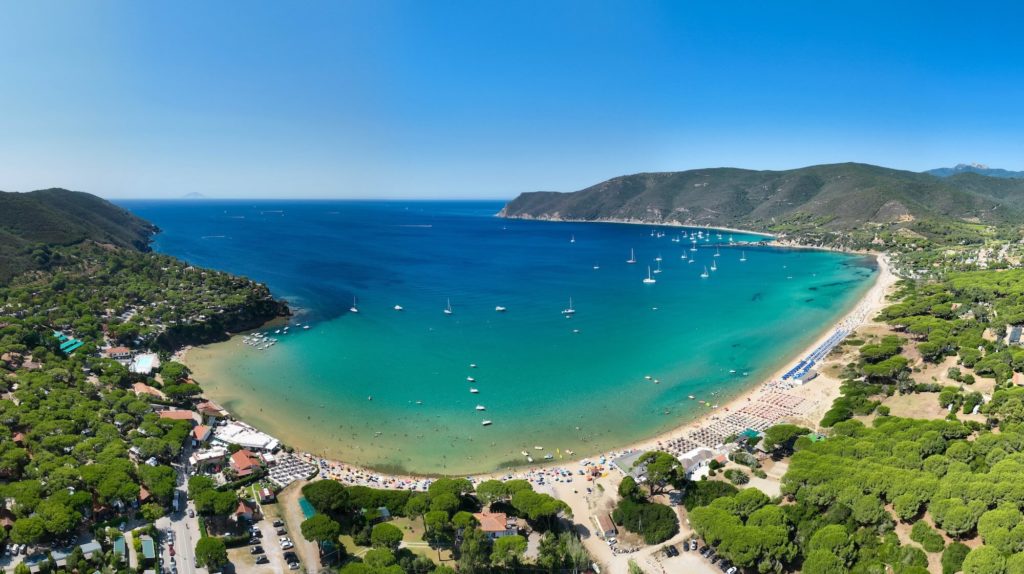
Welcome to our official guide – a text of more than ten thousand words through which the staff of Hotel Giardino want to share the Island of Elba starting from our little paradise in Lacona. We are a family‑run hotel nestled in a 30 000 m² pine forest a few steps from the long golden beach of Lacona. Here, among protected dunes and wild orchids that colour the landscape every spring, we have cultivated the tradition of hospitality and home cooking for generations . Our strategic position in the Gulf of Lacona, in the centre of the island, lets you reach medieval villages, mines, nature parks and beaches of every type in just a few minutes . In these pages we guide you in discovering Elba, answering the most frequent questions, proposing itineraries and providing summary tables to help you plan your stay .
Hotel Giardino: our home between pine forest and sea
History and philosophy
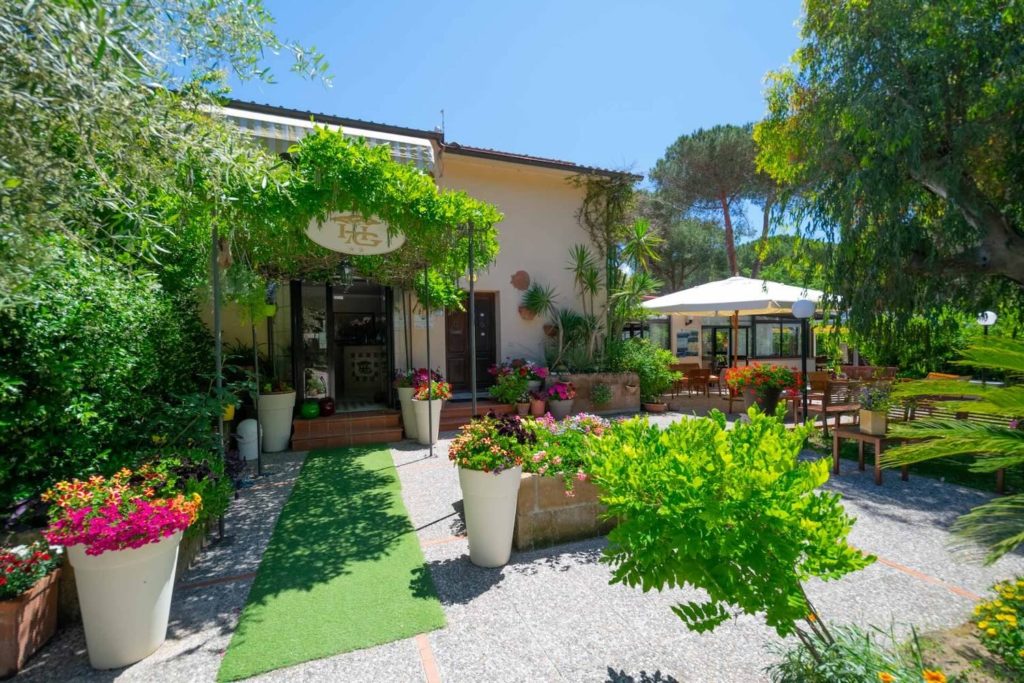
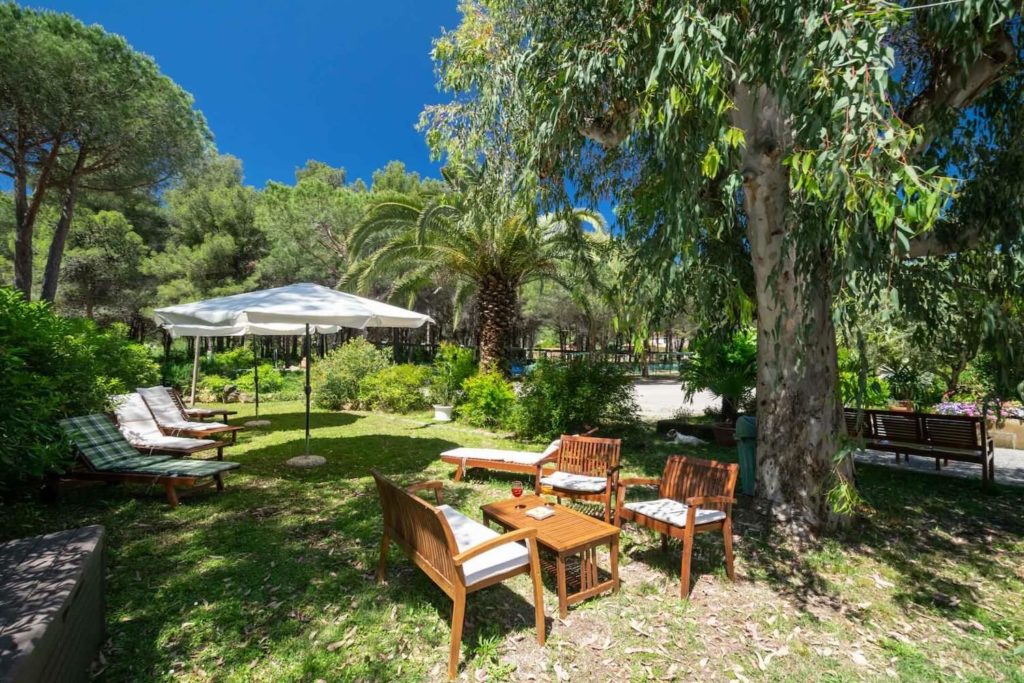
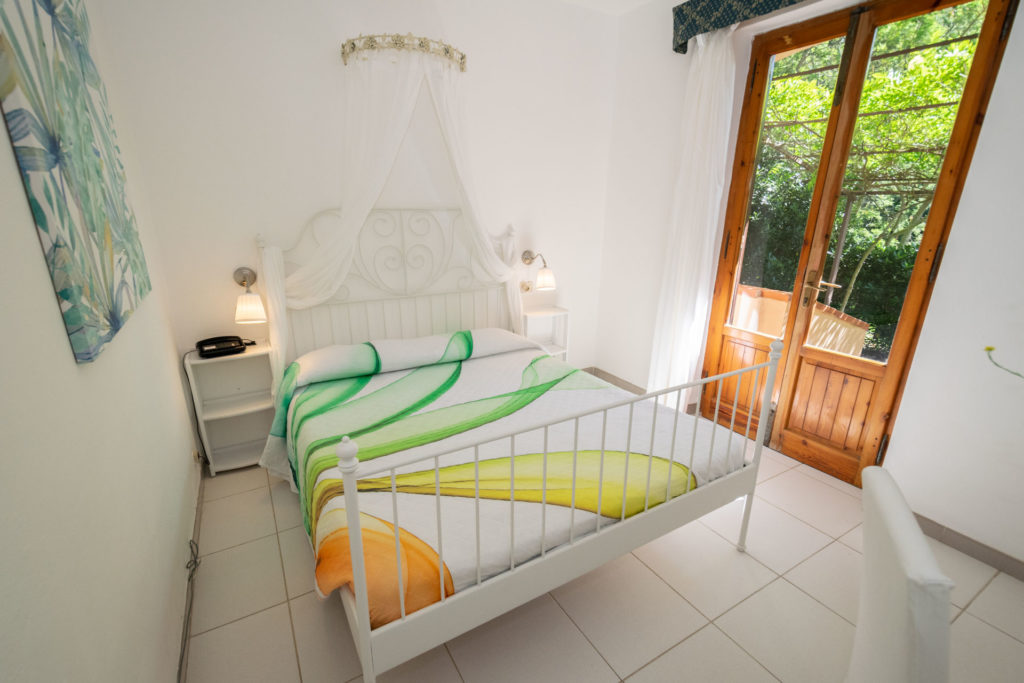
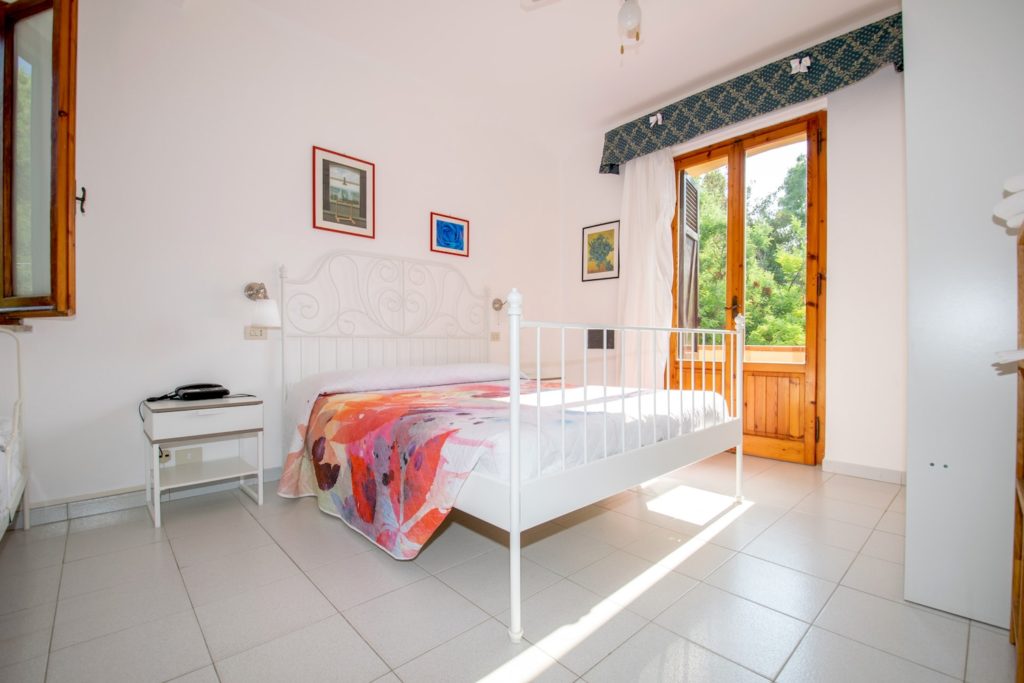
Hotel Giardino began as a small family pension in the 1960s, when Lacona was still little known. Over the years our family turned this simple guesthouse into a green refuge consisting of three residential units immersed in a large park with century‑old pines. Although it is a 3‑star hotel, the care for guests is like that of a home: simple but clean rooms, an informal atmosphere and a friendly relationship between staff and travellers. Many guests choose us because they love waking to birdsong and falling asleep to the rustle of the pines and because they appreciate the tranquillity of the place .
Rooms and services
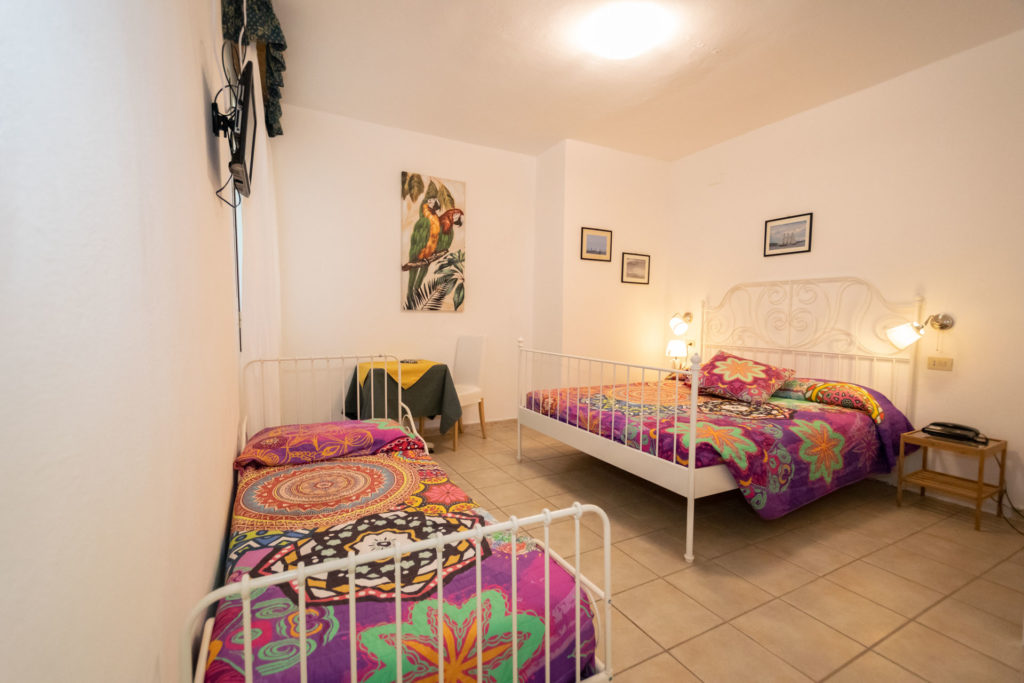
Our rooms are spread over three buildings surrounded by flower gardens. Each room has a private bathroom with shower, satellite TV, telephone and safe . Some have a balcony, others a patio or small private garden and air conditioning; ground‑floor rooms open directly onto the pine‑forest paths . We provide a shaded numbered car park included in the price and offer free Wi‑Fi in the communal areas and in the rooms . Families with children will find a playground with swings, table football and table tennis . The hotel is pet friendly and dogs are welcome: they can run freely in our large fenced garden or accompany you along the path that leads to the beach .
A simple and genuine cuisine
Our cuisine is one of the reasons why many guests return every year. At breakfast you will find a generous buffet with homemade cakes, jams, local honey and savoury products; for lunch and dinner we offer dishes from Elba’s tradition prepared with fresh seasonal ingredients . The chef prepares fish sauces, garden vegetables and selected meats, and pays special attention to children and people with special diets by preparing dedicated menus . Once a week in fine weather we organise an outdoor barbecue in the park. The half‑board or full‑board service is flexible: you can choose to dine under the porch or take a packed lunch with you if you plan an excursion .
Additional services
In addition to meals and accommodation, we offer several services to make your holiday enjoyable. You can rent bicycles or e‑bikes and use the bike storage, take part in diving and snorkelling courses in collaboration with nearby dive centres, book ferry discounts and receive assistance to organise trips . On request we provide picnic baskets for excursions and have agreements with beach clubs that include umbrella and sunbeds. For runners and cyclists we offer a laundry for sports clothing and early departures with hearty breakfasts during race weekends .
Hotel Giardino as a base for exploring Elba
When we say that Hotel Giardino is the ideal starting point, we are not exaggerating: we are ten minutes by car from Marina di Campo and Portoferraio and a quarter of an hour from Porto Azzurro and Capoliveri . Our central location allows you to reach both the beaches of the southern coast and those of the north in a short time; the provincial road in front of the hotel leads to all the main villages . On foot you can reach the beach of Lacona in five minutes along a path that crosses the protected dune area . Later in this guide we explore the attractions around us and suggest daily itineraries to discover the island without stress.
To reach the Island of Elba you must board at Piombino Marittima, with ferries of the companies Toremar, Moby Lines, Blu Navy and Corsica Ferries. From Portoferraio you arrive at the hotel in about fifteen minutes by car. If you travel without a car, you can rent scooters or bikes or use the bus line connecting Portoferraio to Marina di Campo with a stop at Lacona.
Lacona beach and the orchid dunes
A unique shoreline
Lacona beach is one of the last unspoilt sandy shores of the Tuscan Archipelago National Park; it stretches for about 1.2 km between Capo Fonza and Capo Stella . Its very fine golden sand, southern exposure and clear waters make it ideal for families and for anyone who loves spending long days by the sea . On the inner dunes grow sea lilies (Pancratium maritimum) and other rare species such as Santolina, Vedovina and Crucianella . Along the shoreline there are beach clubs, bars, restaurants, diving centres, pedal boat, canoe and SUP rentals as well as large areas of free beach; behind the beach extends a pine forest that provides natural shade .
The dune area and the orchids
In 2014 the Park purchased and restored the dune area of Lacona to preserve this delicate ecosystem . The dunes function as a natural barrier against storm surges and host halophytic plants that withstand wind and salt . The Park built raised walkways to prevent trampling and protect plant roots . Between April and May, along the paths that depart from our hotel, small wild orchids with pink and purple hues bloom . For this reason we call our guide “The Orchid Oasis”: our garden turns into a flowery carpet inviting relaxing walks .
Beach activities
Lacona offers many activities: the water slopes gently, therefore it is suitable for children and for those who love swimming . The rocky seabed farther out hosts Posidonia meadows and rocks where you can snorkel and dive . Along the beach you will find beach volleyball courts and rentals for canoes, windsurfs and sailing boats . Our hotel collaborates with a diving centre to organise dives at the shoals of Capo Fonza and Capo Stella .
Nearby beaches
There are other wonderful beaches near Lacona, all reachable in a few minutes by car or bike :
- Laconella: a small sandy bay set between cliffs, reachable by a path that starts from Lacona beach .
- Margidore: long black‑pebble beach, ideal for mooring boats and snorkelling, with water‑sports facilities .
- Norsi and Acquarilli: wilder beaches; Norsi has dark pebbles and clear water, while Acquarilli is frequented by naturists .
- Ripa Nera: a more secluded rocky cove, recommended for lovers of tranquillity and deep water .
- Felciaio: small pebble beach framed by smooth rocks .
- Lido di Capoliveri: large sandy beach with facilities, very popular with families .
Every morning at reception we provide information on winds and sea conditions to choose the most suitable beach; in case of northerly winds (Tramontana, Grecale, Maestrale) Lacona offers calm sea .
Capoliveri and Monte Calamita: between mines and villages
The village of Capoliveri
Capoliveri, only ten kilometres from Hotel Giardino, is an ancient medieval village perched on a hill at 167 m altitude . Its name comes from the Latin Caput Liberum, and its urban layout is a maze of narrow alleys (chiassi) opening into little squares with bars and craft shops . The village is dominated by the church of San Michele, with late‑Romanesque frescoes, and hosts the Mineral Museum where the rare green quartz prasium is displayed . Strolling around you will find shops selling ceramics, jewellery made of Elban minerals and food and wine products .
Capoliveri boasts numerous beaches: sandy ones (Barabarca, Calanova, Felciaio, Ferrato, Innamorata, Lacona, Lido, Morcone, Naregno, Norsi, Pareti, Straccoligno and Zuccale) and others mixed with sand and pebbles such as Madonna delle Grazie, Margidore and Remaiolo . Each beach has its own personality: Innamorata is linked to a love legend celebrated every 14 July during the Festa dell’Innamorata with costumed reenactments and a torchlight procession on the sea . In October the Festa dell’Uva takes place: the districts compete with floats dedicated to the harvest and offer tastings . Capoliveri is also home to the Capoliveri Legend Cup, a mountain‑bike race on Monte Calamita that is part of the UCI World Marathon Series .
Monte Calamita and the mines
The Monte Calamita headland (413 m) forms the south‑eastern peninsula of Elba. Here are deposits of magnetite, hematite and other minerals that made Elba famous since antiquity. Legend has it that the mountain’s magnetite altered the compasses of ships, causing shipwrecks . Etruscans, Romans, the Pisans and the Medici exploited the mines until their closure in 1981 . Today you can visit the Calamita Mining Park and the Open Air Museum with guided tours through the galleries and the underground Ginevro mine, which has 7 km of tunnels . Former miners proudly tell their experiences; walking among the old carts and cableways provides a taste of industrial archaeology .
Capoliveri Bike Park
Monte Calamita has become a natural playground with more than 100 km of signposted trails forming the Capoliveri Bike Park. The permanent routes are divided into five rings of different difficulty :
- Calamita Trail (green, 19 km, 350 m ascent): starts from Piazza del Cavatore in Capoliveri, descends toward Straccoligno beach, crosses the bays of Ferrato, Malpasso and Calanova, runs along vineyards and mines and returns to the town via the panoramic road above the beaches Innamorata, Pareti and Morcone . The route alternates asphalt and dirt roads; drinking water is available only at the Tenuta delle Ripalte sales point during the season .
- Ripa Est (yellow): medium‑difficulty route on the eastern slope offering views of the coast and sea .
- Miniere (red): technical route across the mining areas with single tracks .
- World Cup (black): challenging trail used for the 1994 MTB World Cup and suitable for experts .
- Legend Cup (blue): extreme route partly coinciding with the namesake race .
In addition to the loops, the bike park offers enduro descents and bike rental and guide services. From the headland you can admire the Stella Gulf, the island of Pianosa, Corsica and the Gulf of Porto Azzurro . Cycling enthusiasts can leave Hotel Giardino, reach Capoliveri in a few minutes, tackle the trails and return to relax in the garden .
Hiking: Monte Capanne and via ferrata routes
Elba is not only sea: it hosts the granite massif of Monte Capanne (1 019 m), the highest peak of the Tuscan Archipelago. One of the most adventurous paths is trail no. 100 with iron rungs – a via ferrata route classified for experienced hikers with equipment (EEA). It starts from the Monte Perone picnic area and runs along the highest ridges, offering spectacular views of the islands and Corsica . The path is 3.56 km long and requires about six hours total, with 336 m ascent and 175 m descent . The rock slabs can be slippery and there are exposed sections; it is essential to wear helmet, harness and ferrata kit . Those who do not want to face the ferrata can take the cable car from the village of Marciana or follow easier trails .
Cities and attractions of the island
Portoferraio: capital and Medici fortifications
Portoferraio, the island’s main town, was founded as Cosmopoli by the Medici in the 16th century. The historic centre is characterised by an orderly network of Renaissance streets, churches and palaces. The powerful fortifications – Forte Falcone and Forte Stella – still protect the town . Among the monuments to visit are the Torre del Gallo, the churches of the Nativity of Mary and San Cristino, and the Foresiana Art Gallery with 19th‑century artworks . Walking through the squares overlooking the harbour you breathe the town’s cosmopolitan atmosphere, enriched by shops and cafés .
Napoleonic residences
During his exile (4 May 1814 – 26 February 1815), Napoleon Bonaparte resided on Elba. The two official residences are now museums and bear witness to the imperial period:
- Palazzina dei Mulini (Villa dei Mulini): initially two houses on a promontory between Forte Falcone and Forte Stella. Napoleon merged them, added a second floor and turned the stable into a ballroom; he chose this residence because he loved the fresh air and commanding position . After the Hundred Days he donated the villa to the municipality. On the ground floor are the salon, study and bedroom with original furnishings and the Elban flag painted on a wall; the first floor housed apartments for his wife Maria Luisa and son, who never joined him . Today visitors can admire the library and a sword belonging to the emperor .
- Villa San Martino: about 4 km from Portoferraio, Napoleon bought it in June 1814 as his summer residence . After his departure it remained uninhabited until the Russian prince Anatoly Demidov bought it and built a neoclassical gallery named after himself . Today the villa houses prints and furnishings of the 19th century; the most famous room is the Egyptian Hall decorated in an Orientalist style, while another room contains the statue of Galatea inspired by Pauline Bonaparte .
Museums and archaeological sites
The Linguella Archaeological Museum is housed in the fortress of the same name and preserves artefacts from the 8th century BC to the 5th century AD, evidence of Elba’s role as a Mediterranean crossroads . The collection includes vases, weapons and amphorae from necropolises, villas and shipwrecks; among the most interesting pieces are the anchor from the Montecristo wreck and the Altare di Attiano, a granite block from the 2nd century AD with an inscription . Next to the museum are the remains of the Roman Villa of Linguella, while on the other side of the gulf you can visit those of the Roman Villa of Le Grotte .
Fortresses and castles
From the port of Portoferraio you can glimpse the silhouette of the Castello del Volterraio, the oldest fortification on Elba. Situated on a high plateau at 394 m between Portoferraio and Rio nell’Elba, it dates back to the 12th century and probably takes its name either from vultur (vulture) or from its designer Vanni Gherardo Rau of Volterra . For centuries its strategic position dominated the Tyrrhenian Sea: the hill was used as a fortress already in the 4th century AD; then the Pisans in the 13th century incorporated the castle into the island’s defensive system . Fortified in 1440, it repelled Turkish attacks in 1544 and was further strengthened by the French in 1798, but after a citizens’ revolt it was abandoned until restoration reopened it in 2016 . The plan is hexagonal and the quadrangular tower, connected by a drawbridge to the walkway, is the oldest part . From the top you enjoy a 360° panorama over the coasts and neighbouring islands .
Marciana and Marciana Marina
On the western side of the island are the twin villages of Marciana and Marciana Marina. Marciana, one of the oldest settlements, is perched at 375 m on the slopes of Monte Capanne and retains medieval walls and the Pisan Fortress . Attractions include the Pieve di San Lorenzo (12th century) and the church of Santa Caterina; the steep alleys lead to the cable car to Monte Capanne . Marciana Marina, overlooking the sea, is an elegant fishing village with a seafront lined with oleanders and colourful houses; summer events and regattas take place here .
Rio nell’Elba and Rio Marina
On the eastern coast stand the towns of Rio nell’Elba and Rio Marina, historically linked to iron mining. At Rio nell’Elba you’ll find the Mining Park Museum with a collection of minerals and the history of the mines, including specimens of prasium and polarised magnetite . Rio Marina houses the Museum of Minerals and Mining Art with reconstructions of galleries and miners’ tools . The hinterland is rich in lunar landscapes created by mining and now crossed by trekking and mountain‑bike trails .
Other cultural and natural attractions
- Caprili di San Piero and Marciana: ancient stone enclosures and domed huts used by shepherds for transhumance; they represent a rare example of rural architecture .
- Napoleonic residences: in addition to those already mentioned, you can visit the Governor’s House in Portoferraio, where Napoleon spent his first night before moving to Villa dei Mulini .
- Romitorio di San Cerbone: a 6th‑century hermitage between Marciana and Poggio dedicated to the saint; the surrounding environment is characterised by centuries‑old chestnut trees .
- Sanctuary of the Madonna di Monserrato: near Porto Azzurro, built in the 17th century by the Spanish governor José Pons y León in fulfilment of a vow; it houses a copy of the Black Madonna of Montserrat .
- Butterfly Sanctuary: on Monte Perone a trail with educational panels has been created to observe dozens of butterfly species – a fascinating way to learn about the island’s biodiversity .
- Famous beaches: Fetovaia with turquoise waters; Cavoli with fine sand; Sansone and Cala dei Frati with white pebbles; Biodola and Procchio with wide beaches; Cala delle Alghe and Paolina surrounded by cliffs; the naturist beach of Acquarilli with dark pebbles .
Sporting events and competitions
Capoliveri Legend Cup
The Capoliveri Legend Cup is a mountain‑bike race held in May or October on the slopes of Monte Calamita. Since 2016 it has been part of the UCI World Marathon Series and includes two courses: the marathon of 80 km with 3 000 m of elevation gain and the granfondo of 50 km with 1 700 m . The route follows the paths of the Capoliveri Bike Park, crossing forests, mines and beaches; on the eve there is the Chiassi Cup, a short race through the alleys of the village . As Hotel Giardino we are partners of the event and offer discounts for athletes and energy‑packed breakfasts .
Elbaman Triathlon
Elbaman is an extreme triathlon held in September at Marina di Campo. It comprises the full distance (3.8 km swim, 180 km bike and 42.2 km run) and the Elbaman73 version with half distances . The race begins at dawn with a swim in the bay, continues with several bike laps around the island and ends with a marathon between the town and the pine forest; races for children and relay teams are also provided, with aid stations and assistance . Our hotel welcomes triathletes and families with targeted menus and dedicated services .
Giro Podistico a Tappe dell’Isola d’Elba
The Giro Podistico is a stage race organised every spring for twenty years. The 2023 edition comprised five stages distributed among Portoferraio, Rio Marina, Marciana Marina, Porto Azzurro and Capoliveri with varying distances – city circuits, routes through the mines and a rest day . It is a CONI‑ and AICS‑recognised event open to competitive and amateur runners; categories include junior, senior and master. Participating in all stages allows you to discover different aspects of the island .
Marathon and trail running
- Maratona dell’Isola d’Elba: held in spring, it offers the full marathon (42.195 km) and the half marathon (21.097 km) along the scenic Costa del Sole between Marina di Campo, Seccheto and Chiessi, and is accompanied by a 10 km flat race, a 13 km uphill race and a 5 km Family Run .
- Elbatrail: trail‑running race in Marciana Marina with courses of 60 km (3 000 m D+), 25 km (1 100 m D+), 13.5 km (450 m D+) and a 10 km walk; the 2018 edition hosted the GTE Reloaded, a 60 km race from Cavo to Marciana Marina .
- Stracosmopoli: non‑competitive 9 km run held in August in the historic centre of Portoferraio and within the Medici walls, allowing participants to run through squares, bastions and alleys with views of the gulf and forts .
- Libeccio Trail: spring race of 15 km with 800 m elevation gain in Sant’Andrea; the route passes through Mediterranean scrub, chestnut woods and granite cliffs, with splendid views of Monte Giove .
- Miniera in Trail: competition through the mines of Rio Marina featuring a 27 km competitive race with 970 m D+ and two shorter routes of 14 km and 11 km, covering mining landscapes and sea panoramas .
Traditions, cultural events and popular festivals
Festa dell’Innamorata
On 14 July the Innamorata beach is lit up with torches and boats during a suggestive historical reenactment. Tradition tells that in 1534 the young Maria, in love with Lorenzo, saw the Saracen ship on which her lover was a prisoner and threw herself into the sea to chase it; since then, every year, a procession in costume parades with banners and the neighbourhoods compete for the Palio dell’Amore . The event includes a procession on land and one at sea, fireworks and tastings of Aleatico wine and schiaccia briaca .
Festa dell’Uva
In October Capoliveri celebrates the Festa dell’Uva, a friendly competition between the four districts (Baluardo, Fosso, Torre, Fortezza) that set up harvest‑themed scenes in the streets and offer tastings of wines and local products . The festival features historical parades, folk games and music, and is an opportunity to taste Aleatico and schiaccia briaca . Guests of Hotel Giardino can reach the party in ten minutes and take part in guided tastings .
Other events
- Weekly markets: each village hosts a weekly market where you can buy zero‑kilometre products, crafts and clothing. Portoferraio’s market is on Friday morning, Marina di Campo’s on Wednesday and Capoliveri’s on Thursday .
- Gastronomic festivals: in summer the villages hold festivals with menus based on stuffed squid, cacciucco, gurguglione and stoccafisso alla riese – taking part is the best way to immerse yourself in the island’s farming and maritime culture .
- Music festivals: Elba hosts classical and jazz festivals; among these the “Isola Musicale d’Europa”, which organises concerts in evocative places such as the Roman Villa of Le Grotte and Forte Falcone .
Elban cuisine and wines: tasting the island
Traditional dishes
The cuisine of Elba is the result of influences from various cultures. In the Middle Ages Saracen pirates introduced spices and sweets, while Spanish and Neapolitan rulers brought ingredients such as salted cod. Many dishes were born as cucina povera, i.e., with simple seasonal ingredients. Not to be missed :
- Schiaccia briaca: a cake made with raisins, pine nuts and Aleatico wine. Created as an alcohol‑free cake brought by sailors for long preservation, in the 19th century it was enriched with wine and dried fruit .
- Gurguglione: stew of vegetables (aubergines, peppers, tomatoes and courgettes) with olive oil, typical of peasant cuisine .
- Stoccafisso alla riese: stewed cod with potatoes, olives and tomatoes, introduced by sailors from Rio; a dish linked to religious feasts .
- Cacciucco: fish soup with tomato and crustaceans, similar to the Livorno cacciucco but enriched with cuttlefish and scorpionfish .
- Risotto al nero di seppia and stuffed squid: examples of seafaring cuisine using cuttlefish and calamari caught in the gulf .
- Polpo lesso and zerri fritti: simple dishes served in seaside restaurants; zerri are local small fish fried whole .
- Traditional Easter sweets: beyond schiaccia briaca, try the sportella (aniseed ring exchanged by lovers at Easter) , the schiacciunta of Poggio and the corollo of Marciana, served with muscat .
Wines and drinks
Elba boasts an ancient wine tradition: the Etruscans and Romans already cultivated vineyards on the island’s slopes, and in the 20th century the DOC “Elba” (1967) enhanced local production . Main wines :
- Aleatico dell’Elba DOCG: a red dessert wine made from grapes that ripen on the vine and then are dried in the sun; the result is a nectar with aromas of dried fruit and jam, perfect with chocolate desserts and schiaccia briaca . Some wineries age it 12–14 months in barrique .
- Ansonica dell’Elba DOC: dry white from the Inzolia grape; straw‑yellow colour and notes of ripe fruit, pairing well with fish and risottos .
- Moscato and Moscato Passito: aromatic wines with floral scents, ideal for dessert .
- Elba Rosso and Elba Rosato: young, fruity wines from Sangiovese and Syrah grapes, perfect with meat and cheese .
- Vermentino and Elba Bianco: fresh whites for seafood starters .
The island also produces grappas and liqueurs based on wild herbs. We organise tastings with sommeliers who guide you through aromas and pairings .
Hotel gastronomy
Our cuisine interprets these flavours with a personal touch. We prepare home cooking with local products and extra virgin olive oil. The menu changes daily: you will find crostini starters, fish soups, hand‑rolled pasta and seafood second courses. On request we organise cooking courses and themed dinners .
Frequently asked questions (FAQ)
- What is the best period to visit Elba? The island has a Mediterranean climate with mild winters and warm summers. Spring (April–June) is perfect for hikes among orchids and butterflies, while autumn (September–October) offers sunny days with fewer crowds and numerous festivals such as the Festa dell’Uva. July and August are ideal for those who love beach life, but we recommend booking in advance .
- Where is Hotel Giardino and how do I get there? The hotel is at Viale dei Golfi 936 in Lacona, in the municipality of Capoliveri, about 100 m from the beach. To reach us you can board in Piombino and disembark at Portoferraio (15 minutes by car) or at the airport of Marina di Campo; the hotel has a car park and offers shuttle service on request. If you arrive without a vehicle you can rent scooters or cars in Portoferraio .
- Is the hotel suitable for children? Yes, we are family friendly: we have family rooms, cots and highchairs, a playground with slide and swings, table tennis and table football; dedicated menus with smaller portions and simple dishes; and Lacona’s wide beach has fine sand and a gently sloping seabed .
- Can I bring my dog on holiday? Of course! We welcome pets at no extra cost: dogs can access our garden and accompany you along the path to the beach. Nearby there are dog‑friendly beaches such as the “Bau Beach” of Fonza .
- Which are the most beautiful beaches reachable from the hotel? Besides Lacona, we recommend Laconella, Margidore, Norsi and Felciaio (just a few minutes by car or bike) . For a longer trip you can visit Fetovaia and Cavoli on the western side or the beach of Sansone near Portoferraio .
- Where can I snorkel and dive? The best areas for snorkelling are Capo Fonza and Capo Stella, where the rocky seabed hosts Posidonia meadows and gorgonians . Diving centres in Lacona, Morcone and Marina di Campo organise dives at the shoals off Punta Fetovaia, in the caves of Capo Mele and at wrecks off Pomonte .
- Are there trekking and mountain‑bike routes? Which do you recommend? Yes, the island offers hundreds of kilometres of trails. Near the hotel is the Capoliveri Bike Park with routes for all levels . For trekking we recommend the ascent of Monte Capanne (if you have experience and equipment) and walks between the villages of Marciana, San Piero and Poggio . Remember to bring water, trekking shoes and, if you tackle the via ferrata, harness and helmet .
- Which sports events can I attend during my stay? Depending on the period you can watch the Capoliveri Legend Cup (May or October), the Elbaman Triathlon (September), the Maratona dell’Elba (spring) and numerous trail races (Elbatrail, Libeccio Trail, Miniera in Trail) . Ask at the reception: we will be happy to accompany you as spectators or participants .
- Which typical dishes must I absolutely taste? You can’t leave Elba without tasting schiaccia briaca (sweet with raisins and Aleatico), gurguglione, cacciucco di pesce and boiled octopus. For wines, try Aleatico DOCG and Ansonica .
- What are the main museums and cultural sites on the island? The most important are: the Archaeological Museum of Linguella (Portoferraio), the Napoleonic residences (Palazzina dei Mulini and Villa San Martino), the Mineral Museum of Capoliveri, the Mining Park Museum of Rio and the Linguella Museum . Also worth seeing are the Romitorio di San Cerbone, the Sanctuary of the Madonna di Monserrato, the Butterfly Sanctuary, the caprili of San Piero and the Castello del Volterraio .
- Are there markets and folk festivals during the summer? Yes, almost every village organises a weekly market. In July the Festa dell’Innamorata takes place and in October the Festa dell’Uva in Capoliveri. In summer you will find gastronomic festivals and music festivals .
- How should I prepare for a hike in the national park? We recommend non‑slip trekking shoes, hat, suncream, water and a first‑aid kit. If you intend to tackle the Monte Capanne via ferrata, bring harness, helmet and via‑ferrata kit. Remember that in protected areas it is forbidden to pick plants, light fires or leave litter .
Summary tables
The following tables summarise information on services, beaches, attractions, events and typical dishes using short phrases to allow quick consultation .
Hotel Giardino services
| Service | Description |
|---|---|
| Rooms | 30 simple rooms with private bathroom; some with balcony, patio or garden |
| Restaurant | Buffet breakfast with homemade products; lunch and dinner with Elban cuisine and menus for children and special diets |
| Park & garden | 30 000 m² of pine forest and fenced garden; private path to the beach |
| Parking | Shaded numbered parking included in the price |
| Wi‑Fi | Free connection in rooms and common areas |
| Children’s activities | Playground, table football and table tennis |
| Bike rental | Bike storage and MTB and e‑bike rental through partners |
| Sports & excursions | Agreements with diving and snorkelling centres; bookings for trekking and trips |
| Pet friendly | Animals welcome with no extra charge; fenced outdoor area |
Nearby beaches and their features
| Beach | Type & services | Distance from the hotel |
|---|---|---|
| Lacona | Golden sand; protected dunes with sea lilies; beach clubs, bars, diving, beach volley | 100 m (5 min on foot) |
| Laconella | Small secluded sandy bay; ideal for snorkelling | 2 km (10 min by car or 20 min on foot) |
| Margidore | Dark‑pebble beach; boat mooring; water sports | 3 km |
| Norsi | Dark pebbles; wild atmosphere | 4 km |
| Acquarilli | Naturist beach; dark pebbles; access via path | 5 km |
| Felciaio | Pebble cove with smooth rocks | 6 km |
| Lido di Capoliveri | Large sandy beach with full services | 7 km |
Main attractions and travel times from the hotel
| Attraction | Highlight | Travel time |
|---|---|---|
| Capoliveri | Medieval village, chiassi, Mineral Museum with green prase quartz | 10 min by car |
| Monte Calamita | Mines, Capoliveri Bike Park | 15 min |
| Portoferraio | Historic centre, Medici forts, Napoleonic residences | 15 min |
| Villa San Martino | Napoleon’s summer residence with Egyptian Hall | 20 min |
| Castello del Volterraio | Medieval fortress with panoramic view | 25 min |
| Marciana & Monte Capanne | Ancient village, Pisan Fortress, cable car to the summit | 40 min |
| Rio Marina | Museum of Minerals and mines | 35 min |
| Sanctuary of Monserrato | 17th‑century sanctuary on a rocky spur | 25 min |
Sports events
| Event | Period | Characteristics |
|---|---|---|
| Capoliveri Legend Cup | May or October | 80 km marathon and 50 km granfondo; includes Chiassi Cup |
| Elbaman Triathlon | September | Full and half triathlon; swim, bike, run |
| Marathon of Elba | Spring | Marathon, half marathon, 10 km and Family Run |
| Elbatrail | Spring | Trail running 60 km, 25 km, 13.5 km; charity event |
| Stracosmopoli | August | 9 km non‑competitive run in Portoferraio |
| Libeccio Trail | Spring | 15 km through cliffs and Mediterranean scrub |
| Miniera in Trail | Spring | 27 km, 14 km and 11 km routes in the mines |
| Giro Podistico a tappe | May | 5 stages in different towns; competitive and amateur |
Typical dishes and wines
| Dish or drink | Main ingredients | Notes |
|---|---|---|
| Schiaccia briaca | Raisins, pine nuts, Aleatico wine | Symbolic cake of the island with long shelf life |
| Gurguglione | Aubergines, peppers, courgettes, tomatoes | Country vegetable stew |
| Stoccafisso alla riese | Cod, potatoes, olives | Dish linked to Rio Marina |
| Cacciucco elbano | Mixed fish, tomato, crustaceans | Elban variant of Livorno fish soup |
| Risotto al nero di seppia | Rice, cuttlefish and their ink | Intense colour and flavour |
| Polpo lesso | Octopus, herbs | Traditional starter |
| Sportella | Flour, sugar, anise | Easter sweet exchanged by lovers |
| Aleatico DOCG | Dried Aleatico grapes | Sweet meditation wine paired with desserts |
| Ansonica | Inzolia grape | Dry white for fish |
| Moscato and Moscato passito | Moscato grape | Aromatic wines |
| Elba Rosso and Rosato | Sangiovese & Syrah grapes | Perfect with meat and cheese |
Conclusion
We hope this guide has made you dream of the Island of Elba and provided all the useful information to organise your stay. Hotel Giardino is the ideal place for those who wish to experience the sea, nature and culture of Elba in a family atmosphere . With our central location, rooms immersed in greenery, genuine cuisine and services for families and sports lovers, we will accompany you in discovering beaches, medieval villages, mines, museums and panoramic paths . Whether you love relaxation, outdoor sports, food or history, Elba will win you over. We await you among the pines and orchids of our garden to share emotions and create unforgettable memories .