

Introduction
“Where should I sleep near the village of Capoliveri?” If you are planning a holiday on the island of Elba and want to base yourself near Capoliveri, this comprehensive guide prepared by the Hotel Giardino team is for you. Here you will find not only a detailed description of the hotel – our “home” – but also an overview of the natural and cultural context of southern Elba. We offer tips on what to see, which activities to try and which local specialties to taste, all organised in a Q&A format with summary tables and curiosities. Our goal is to make you feel as if you are already on holiday while guiding you step‑by‑step in your discovery of Elba .
The Hotel Giardino: philosophy and family hospitality
History and values
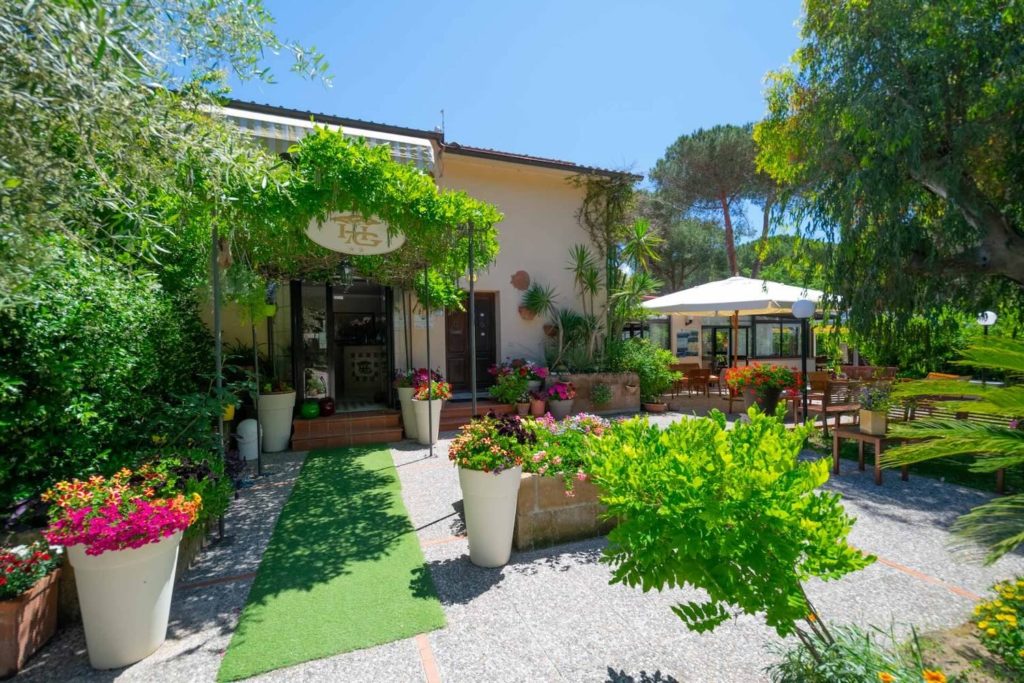
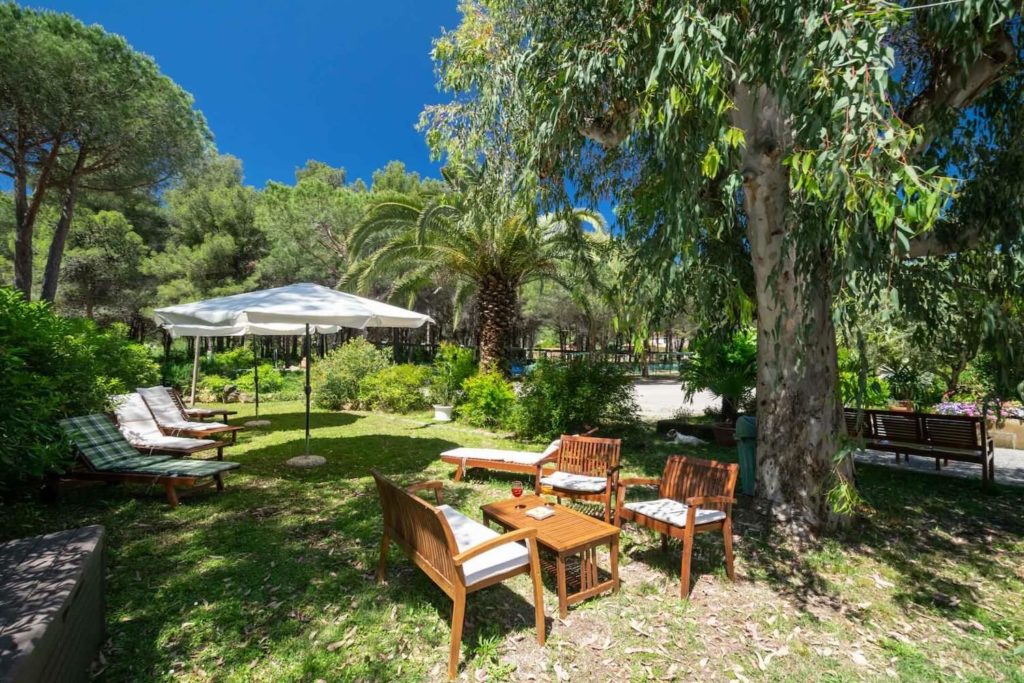
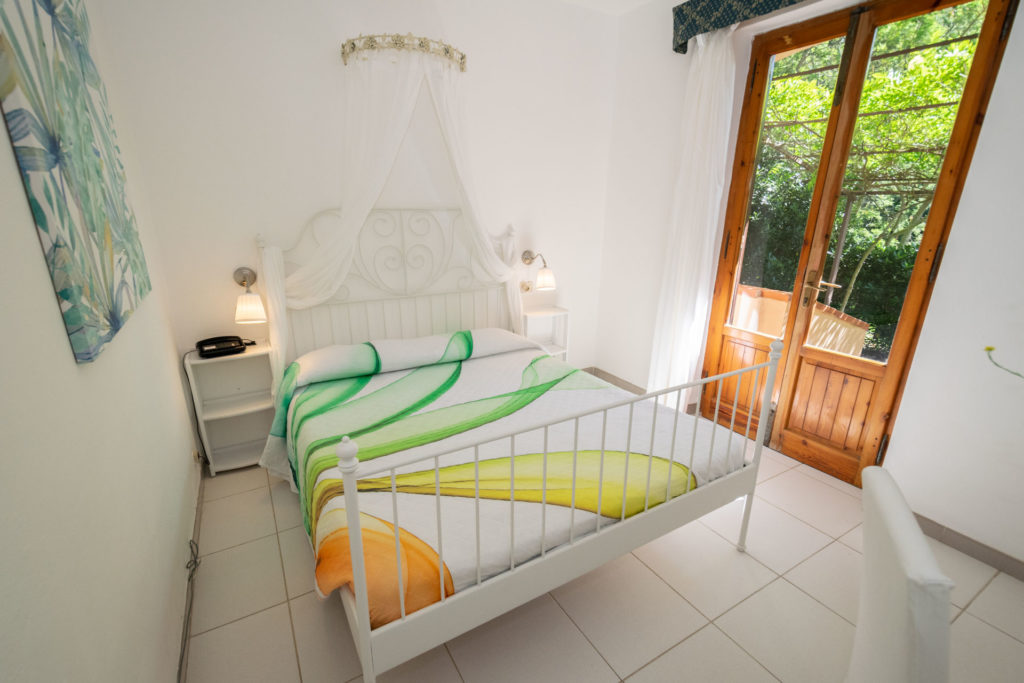
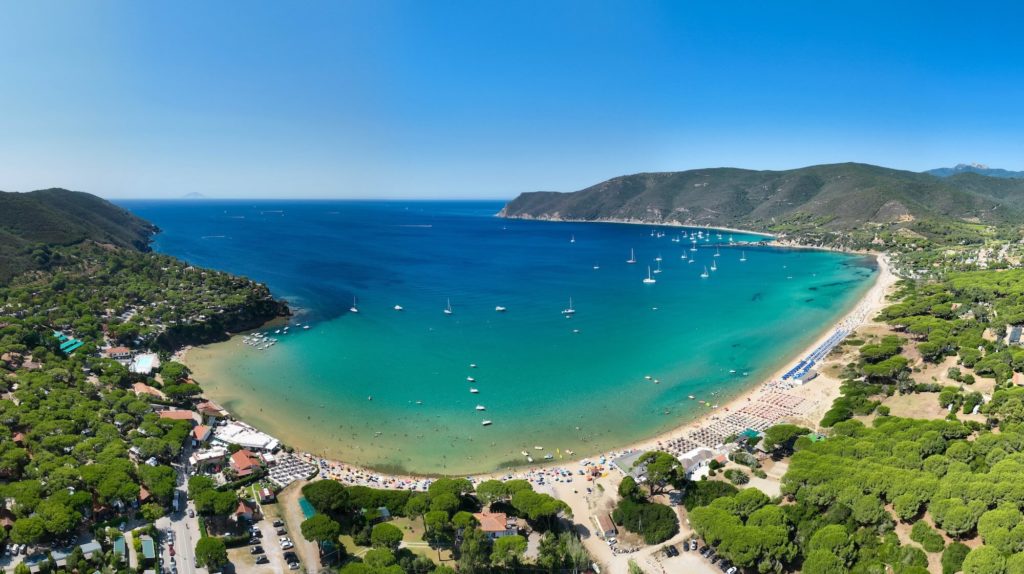
Hotel Giardino is a family‑run hotel located in the beautiful bay of Lacona, part of the municipality of Capoliveri. The property lies in a shaded park of about 30 000 m² with pine trees and Mediterranean vegetation and is divided into three small buildings surrounded by an extensive garden . Our family began welcoming guests just after the Second World War and, although the buildings have been renovated over the years, our guiding principles remain the same: warm hospitality, attention to detail and respect for the environment . The family management creates an intimate and informal atmosphere where every guest is looked after personally.
A green oasis
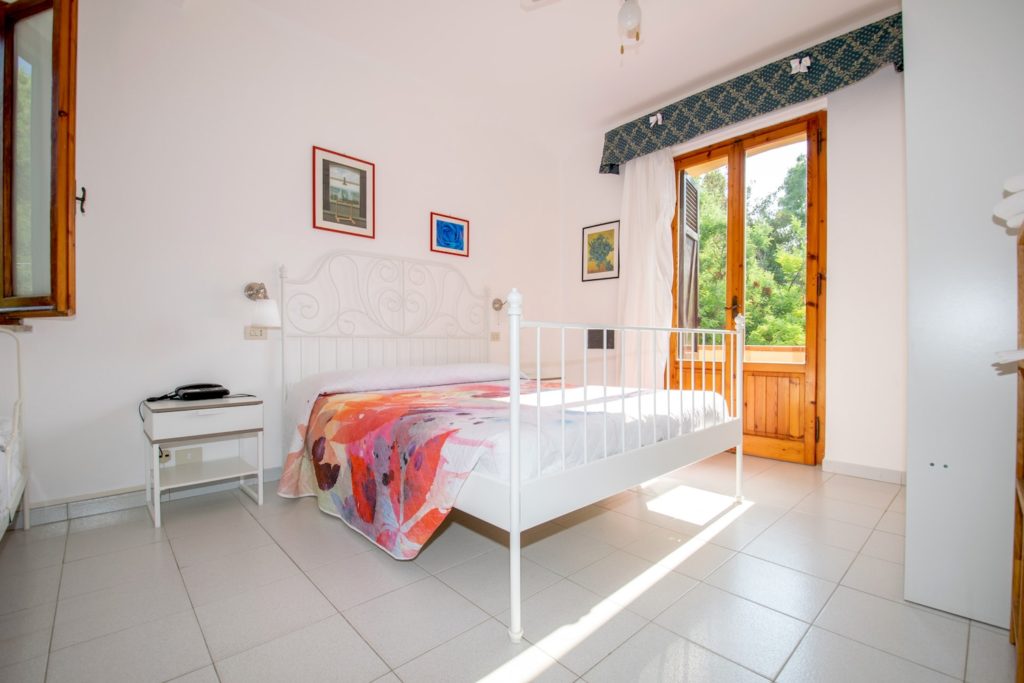
Thanks to the large park, guests can enjoy a relaxing holiday immersed in nature. Rooms are housed in low‑lying buildings surrounded by greenery, each with its own patio or balcony . In the garden you will find a small playground, a ping‑pong table and table football, shady relaxation areas and a barbecue area that we use for evening grills in summer. A path through a protected dune area leads directly to Lacona Beach with its fine golden sand and shallow water – ideal for families with children .
Strategic position
Beyond being next to the sea, Hotel Giardino is an excellent base for exploring the entire island. In ten to fifteen minutes by car you can reach Capoliveri, Marina di Campo, Porto Azzurro and Portoferraio . Its central location allows you to alternate days on the beach with mountain hikes or visits to historic villages. Many guests use our hotel as a base for sporting events such as the Giro Podistico dell’Elba, the Capoliveri Legend Cup and the Elbaman triathlon .
Main services
To make your stay comfortable and carefree we offer:
- Air‑conditioned rooms equipped with flat‑screen TV, safe, telephone and private bathroom with shower and hairdryer . Some rooms have direct access to the garden, others a balcony or patio.
- In‑house restaurant serving traditional dishes prepared with local, seasonal produce. Breakfast is buffet style with homemade cakes, jams and seasonal fruit; at lunch and dinner we offer menus with vegetarian or gluten‑free options .
- Free Wi‑Fi in the common areas – restaurant, bar and relaxation zones .
- Shaded private parking, one numbered space per room .
- Bike storage and partnerships with nearby diving and snorkelling centres .
- Pet‑friendly hospitality – pets are accepted on request .
- Discounted ferry tickets for guests booking through our hotel .
What our guests say
Reviews emphasise our friendly staff, the careful cleanliness of the rooms, abundant breakfasts and the family atmosphere . Guests appreciate our shady pinewood location and the opportunity to rest in the private garden. Some rooms have renovated bathrooms and private verandas, and families particularly enjoy the simple, tasty cuisine prepared with local ingredients .
Frequently asked questions about Hotel Giardino
To facilitate your planning, here are answers to the most common questions:
- Is the hotel near the beach? Yes, Hotel Giardino is about 100 m from Lacona beach; you simply walk across a protected dune area .
- Do the rooms have air conditioning? All rooms are air‑conditioned and equipped with flat‑screen TV, safe and private bathroom .
- Are pets allowed? We are happy to welcome your four‑legged friends. Please let us know when booking .
- Is parking available? There is a shaded parking area with numbered spaces for each room .
- Does the hotel have Wi‑Fi? Yes, free Wi‑Fi is available in the common areas .
- Are there options for coeliacs or vegans? Our restaurant adapts its menus to guests with intolerances or special diets; please advise us when booking .
- Are ferry discounts offered? Yes, we can provide discounted tickets for ferries to Portoferraio, Rio Marina or Cavo; contact us in advance .
- Are there activities for children? We have a playground, table football and ping‑pong. Lacona beach’s shallow, sandy bottom is ideal for children .
- What is the best time to stay? Elba enjoys a Mediterranean climate. Summer (June–August) is hot and sunny, perfect for the sea, with average temperatures around 23 °C in August . Spring and autumn (April, May, September, October) offer mild days with fewer tourists and are favoured for trekking and cycling . The hotel closes for a winter break.
Our rooms and common spaces
Standard rooms
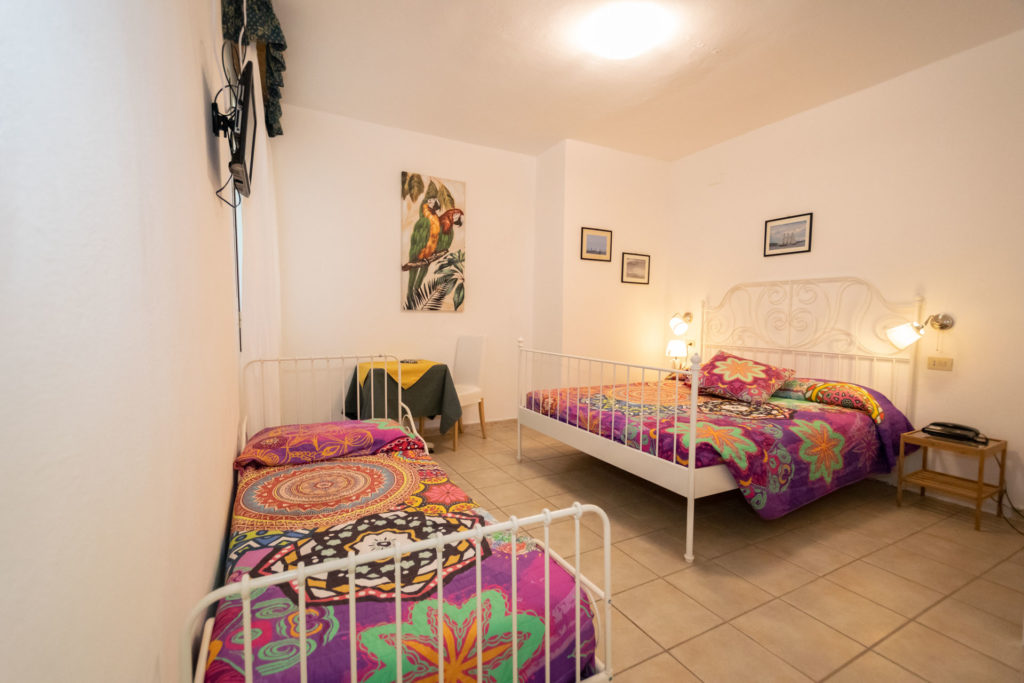
Our standard rooms are designed for those seeking essential comforts at a reasonable price. They feature a double or twin bed, private bathroom with shower, air‑conditioning, TV, telephone and safe. Some rooms have a patio overlooking the garden, others a small balcony, and the colours are calm and natural. Daily cleaning is meticulous .
Family rooms
Ideal for families of up to four people, family rooms are larger and include a double bed plus two single beds or a sofa‑bed . Some are located on the ground floor with independent entrance and private outdoor space. Bathrooms with shower boxes have been recently renovated. On request we provide cots or beds with side rails for small children .
Common areas
The heart of the hotel is the restaurant/bar, a bright environment overlooking the garden where breakfast buffets and main meals are served . Guests can also enjoy a TV room, a reading corner and a bar for aperitifs and ice creams. Outside, the large park offers areas furnished with deck chairs, tables and games .
Our cuisine
Breakfast
The day begins with a generous buffet breakfast: homemade cakes, tarts, biscuits, yoghurt, cereals, fresh fruit, cheeses, cured meats, juices and espresso coffee . On request we provide gluten‑free or vegan alternatives.
Lunch and dinner
Our restaurant offers Elban and Tuscan dishes prepared with fresh seasonal ingredients. Specialties you can taste include:
- Stoccafisso alla riese: a rich stew of dried cod with tomato, onion, peppers, olives, pine nuts and capers, typical of Rio Marina .
- Gurguglione: a vegetable stew (aubergines, peppers, courgettes, potatoes) originating from the island’s eastern side .
- Cacciucco elbano: a fish soup prepared with various rock fish and served with slices of toasted bread .
- Stuffed squid and boiled octopus: other fishermen’s dishes .
Among the desserts we often propose schiaccia briaca, an ancient unleavened cake made with Aleatico wine, pine nuts and raisins, and corolli from Marciana . The wine list includes local productions such as Elba Bianco DOC, Ansonica, Elba Rosso, Rosato, Moscato and Aleatico DOCG .
Special evenings
In summer we organise outdoor barbecues and themed dinners in the garden with grilled meat and fish accompanied by live music . It is an opportunity to socialise with other guests and enjoy the magic of Elban nights.
Why choose Hotel Giardino
Reasons to stay with us include:
- Location: immersed in nature, close to the beach and just minutes from main centres .
- Family hospitality: we treat you like friends and care about every need .
- Services: comfortable rooms, good cuisine, free parking, Wi‑Fi, playground and green area .
- Environment: a large park with pines, shady areas and tranquillity .
- Pet friendly: your animals are welcome .
Exploring Elba from Capoliveri
Hotel Giardino is an excellent starting point for discovering the island’s many wonders . Below is an overview of the most important places to visit, divided by category with summary tables and practical tips.
The village of Capoliveri
Perched on a hill 167 m above sea level, Capoliveri overlooks the Gulf Stella and offers spectacular views of the sea and mountains . The village retains a medieval layout with narrow alleys and lively little squares called chiassi . Its name may derive from Caput Liberum (dedicated to Bacchus) or from the shape of the headland. Capoliveri was fortified by the Pisans and raided by Saracen pirates; remnants include the Church of San Michele (12th‑century Romanesque) and the Church of the Madonna delle Grazie . The village hosts several events: the Festa dell’Uva in October, La Leggenda dell’Innamorata on 14 July and the Festa del Cavatore during the first week of May, celebrating agricultural and mining traditions .
The Pieve of San Michele
Built in the 12th century during Pisan rule, the Pieve of San Michele is considered one of the island’s most beautiful Romanesque churches . Of the original structure, the apse and parts of the white‑pink stone walls remain. The church once had a single nave and a bell‑gabled façade and stands along the ancient road linking Capoliveri with the port of Mola . In November 1376 Pope Gregory XI, returning from Avignon, sought refuge on Elba due to bad weather and celebrated mass here . The site offers panoramic views over the Mola plain and the Gulf of Porto Azzurro .
The Sanctuary of the Madonna delle Grazie
This sanctuary, located just outside the village on the road to Innamorata, dates back to the Middle Ages but features Baroque forms due to 17th‑century alterations . It has a Latin‑cross plan with two chapels and a bell tower topped by an eastern‑style dome; inside are a coffered wooden ceiling and frescos by the Elban painter Eugenio Allori . It houses a 16th‑century painting, the Madonna del Silenzio by Marcello Venusti, pupil of Michelangelo, showing John the Baptist inviting silence so as not to wake the baby Jesus . The church is open only on special occasions, such as 8 December and jubilee years .
The Ginevro mine and the Old Workshop Museum
On the Monte Calamita promontory south of Capoliveri lie ancient magnetite mines (Calamita, Ginevro and Sassi Neri), exploited for about 3 000 years until 1980 . Today visitors can explore the underground tunnels of the Ginevro mine – the island’s only underground mine – with expert guides . The Old Workshop Museum recounts the history of mining with machinery and documents . A panoramic path follows the miners’ route with views of Corsica, Pianosa, Montecristo and the beaches of Pareti, Morcone and Innamorata .
Forte Focardo
On the headland between Naregno beach and Capo Perla, about 3 km from Capoliveri, stands Forte Focardo. Built in 1678 during Spanish rule and named after governor Don Ferdinando Gioachino Foscardo, the fortress was intended to defend the Gulf of Longone in coordination with Porto Azzurro’s Forte San Giacomo . It was attacked during the War of Spanish Succession and later plundered by locals. Since 1848 it has housed a lighthouse, and although it is military property and not open to visitors, it offers stunning sea views . Writer Raffaello Brignetti lived here in the 1920s and drew inspiration from the island .
Beaches of Capoliveri and surroundings
The southern coast of Elba is a succession of golden bays, wild coves and equipped beaches . Here are the main beaches reachable within a few minutes by car from Hotel Giardino.
Lacona: our “home” beach
Lacona Beach is the island’s second‑longest beach (about 1 200 m) and forms the widest gulf on Elba . It is a stretch of fine golden sand with a gently sloping seabed – ideal for families . The western side borders the Fonza peninsula and the eastern side borders the Capo Stella promontory. Between the protected dunes grows the sea daffodil (Pancratium maritimum) . Behind the beach a large pinewood offers natural shade; services include bars, restaurants, diving schools and boat/ sailboat rentals .
Laconella
Laconella is a small sandy beach in the same bay as Lacona. About 120 m long, it is reached by a 200 m path from the car park . There are no services, so bring water and an umbrella. The setting is wild, with views of the Scola islet and nearby bays .
Barabarca
Barabarca beach, overlooked by Capoliveri, is a sheltered bay with emerald colours, surrounded by Mediterranean scrub with agaves and mastic trees . The light sand is mixed with small pebbles, and seaweed accumulates in some areas; the rocky seabed makes it perfect for snorkelling . The right side of the cove is frequented by naturists. A small kiosk provides chair, pedalo and canoe rentals . Access is via a stepped path from the main road; it is not suitable for pushchairs . Free and paid parking is available nearby.
Zuccale
Zuccale is a beach of golden sand about 180 m long divided in two by a rocky outcrop . Vegetation reaches the shoreline, creating a picturesque setting; from here you can see the Capo Stella promontory and the Monte Capanne massif . It is perfect for families thanks to the gently sloping seabed and clear water; facilities include umbrella, sun bed, pedalo and boat rentals . Access is via a staircase from the car park; the paid parking costs around €8 per day .
Naregno
Naregno beach lies between Capoliveri and Porto Azzurro and is about 500 m long . It is surrounded by pines, cork oaks, acacias and palms. The shallow, sandy bottom makes it suitable for families; amenities include bars, restaurants and water‑sport rentals (sailing, windsurfing, scuba diving, pedalo, canoe) . A path leads to Forte Focardo, and a shuttle links the beach to Capoliveri .
Innamorata
The Innamorata beach is around 290 m long with sand mixed with pebbles . Its name comes from a romantic legend commemorated every 14 July when a costumed parade re‑enacts the story of Maria and her beloved Lorenzo abducted by pirates . The bay is sheltered from the wind and flanked by the Gemini islets, a paradise for canoeing, pedalo and snorkelling . Half of the beach has beach clubs; the other half is free .
Other coves
Other beaches easily reached include Norsi (dark sand and pebbles), Felciaio (a small cove with cliffs and a natural pool), Margidore (a 600‑m pebble beach with a small marina), Pareti, Morcone, Madonna delle Grazie and Peducelli . The variety of shores means there is always a cove to suit your taste, from equipped family beaches to wild coves accessible only on foot or by boat .
Summary table of the beaches
| Beach | Distance from Hotel Giardino | Characteristics | Main services |
|---|---|---|---|
| Lacona | 100 m | 1 200‑m golden sand beach with protected dunes and pinewood; shallow bottom | Bars, restaurants, diving, boat/sail rentals |
| Laconella | 2 km | 120‑m white sand beach; wild environment | None – bring water and umbrella |
| Barabarca | 4.5 km | Sheltered cove with sand and pebbles; ideal for snorkelling | Kiosk, chair and canoe rentals |
| Zuccale | 4.5 km | 180‑m golden sand beach divided by rocks | Rentals of umbrellas, chairs, pedalos, bar |
| Naregno | 7 km | 500‑m sandy beach surrounded by pines | Bars, restaurants, sailing, windsurfing, shuttle services |
| Innamorata | 7 km | 290‑m beach of sand and pebbles linked to a romantic legend | Beach clubs, bar, excursions to Gemini islets |
| Others (Norsi, Felciaio, Margidore, Pareti, Morcone, Madonna delle Grazie, Peducelli) | 5–8 km | Various: sandy or pebbly; peaceful coves | Some equipped, others wild |
Trekking and nature: Monte Capanne and Monte Calamita
Monte Capanne
With an altitude of 1 019 m, Monte Capanne is Elba’s highest peak . On clear days you can see Pianosa, Capraia, Montecristo, Gorgona and even Corsica . The massif is paradise for trekking and birdwatching: trails cross chestnut woods and Mediterranean scrub where over 200 species of mushrooms grow in autumn, including the prized porcini . Mouflon and birds of prey can be spotted . A cable car/chair lift departs from Marciana, travelling from 375 m to 950 m in about 18 minutes . The base station has ample free parking; opening hours vary from April to October (10:00–17:30 in high season) and a return ticket costs about €20 . From the top station, a short path leads to the summit .
Monte Calamita and Capoliveri Bike Park
The Monte Calamita promontory (413 m) is famous for its magnetite mines; today it is a natural gym for mountain bikers . The Capoliveri Bike Park encompasses over 100 km of trails and dirt roads . It is divided into 10 permanent routes: five loops of varying length/difficulty and five enduro descents starting from the heights and ending at the coast . Trails are colour‑coded: green (easy), yellow and red (intermediate), black (difficult) and blue (extreme) . The park suits both beginners and experienced bikers and offers views of the Gulf Stella, Pianosa and Corsica . Some paths reach beaches accessible only on foot or bike; others pass near the Ginevro mine .
Example: the Calamita Trail (green, easy) is a 19‑km loop with 350 m elevation gain starting at Piazza del Cavatore in Capoliveri . The route is half asphalt, half dirt and passes Straccoligno, Ferrato, Malpasso and Calanova beaches , skirts the Tenuta delle Ripalte and reaches viewpoints of Laghetto dei Sassi Neri and Capo Calvo . Along the way you can visit the Old Workshop Museum and the Ginevro mine .
Summary table of Capoliveri Bike Park routes
| Route | Colour/difficulty | Length & elevation | Highlights |
|---|---|---|---|
| Calamita Trail | Green – easy | 19 km; 350 m | Straccoligno, Ferrato, Malpasso, Calanova, Tenuta delle Ripalte, views of Laghetto Sassi Neri |
| Ripa Est Trail | Yellow – intermediate | ≈ 25 km | Panoramic stretches on the east side, technical sections and moderate descents |
| Miniere Trail | Red – intermediate | 22 km | Passes the Calamita and Ginevro mines; possible museum visit |
| World Cup Trail | Black – difficult | 27 km | Route of the 1994 World Cup; steep climbs and technical single tracks |
| Legend Cup Trail | Blue – extreme | 30 km | Race course of the Capoliveri Legend Cup; challenging descents and breathtaking views |
| Enduro 1–5 | Purple – various levels | 2–5 km | Special descents for enduro lovers; each finishes at different beaches |
Porto Azzurro
Only 7 km from Capoliveri lies Porto Azzurro, a picturesque fishing village (population ~3 751) nestled in a natural bay . Formerly called Portolongone until 1947, the village is centred on Piazza Matteotti, a large square by the sea lined with bars and restaurants . The Spanish fortress San Giacomo, built in 1602 by Philip III of Spain to defend the coast, dominates the promontory . The fort is still a prison and cannot be visited, but you can visit the baroque church of San Giacomo and the Madonna del Carmine. Nearby is the Sanctuary of the Madonna di Monserrato, built in 1606 on a rocky spur .
Porto Azzurro’s beaches include Pianotta (small but with clear water), Barbarossa (sand and pebbles, ideal for snorkelling) and Reale/Terranera, with a mineral water lake behind it . Boat trips depart for the coves of the Gulf of Porto Azzurro . Important events include the San Giacomo feast day (25 July) and the Madonna di Monserrato procession (8 September) .
Portoferraio (Cosmopoli)
Elba’s capital, Portoferraio, was refounded in 1548 by Cosimo I de’ Medici as “Cosmopoli” and fortified with three bastions (Falcone, Stella and Linguella) to control maritime traffic and repel pirates . The historic centre is a labyrinth of streets climbing towards the Medici fortress . Strolling along the harbour promenade you pass through the city’s ancient gates .
Napoleonic residences
During his brief exile (1814‑1815) Napoleon Bonaparte lived in Portoferraio. His official residence was Villa dei Mulini, built in 1724 and later adapted to his needs . Now part of the National Museum of Napoleonic Residences, the villa houses original furnishings, a library and gardens overlooking the sea . The villa is currently being restored but is usually open to visitors . Around 5 km from the centre is Villa San Martino, Napoleon’s private residence, also transformed into a museum .
Other attractions in Portoferraio
- San Giovanni thermal baths, where thalassotherapy uses sea‑mud rich in minerals .
- Spiaggia delle Ghiaie, a beach of white pebbles with crystal‑clear water ideal for snorkelling .
- Enoteca delle Fortezze, where you can taste Elban DOC wines .
Excursions to other villages and natural sites
- Marina di Campo: the town lies on one of the island’s longest beaches (1 400 m). The golden sand comes from the granite of Monte Capanne and the shallow sea makes it ideal for families . A pinewood with a playground sits at the eastern end; the western end is lined with cliffs and coves accessible on foot or by boat .
- Marciana and Poggio: medieval villages on the slopes of Monte Capanne, perfect for strolls among the lanes and for tasting local sweets (corollo, schiacciunta). The cable car to the summit departs from Marciana .
- Rio Marina and Rio Nell’Elba: towns linked to the mining history. In Rio Marina you can visit the Elba Mining Park with train tours through the hematite quarries .
- Cavo: a small village in the north‑east, the starting point for excursions to Pianosa and the Tuscan Archipelago National Park .
Cuisine, wine and gastronomy of Elba
Elba’s simple yet flavourful cuisine reflects the meeting of sea and land. In addition to the dishes already mentioned, consider trying:
- Sburrita di baccalà: a soup of salted cod, garlic, chilli, sage and stale bread .
- Zerri fritti: small blue fish dusted in flour and fried, eaten as street food .
- Schiaccia briaca: a Christmas cake made with flour, sugar, olive oil, pine nuts, raisins and Aleatico or Moscato wine; its name comes from the alcohol that “drunks” it .
- Aleatico Passito: a sweet DOCG wine from dried Aleatico grapes with ruby red colour and intense aromas .
- Elba Bianco DOC and Ansonica DOC: fresh, fruity white wines perfect with fish .
- Elba Rosso and Rosato DOC: red and rosé wines made from Sangiovese and Aleatico grapes .
Many wineries offer tastings and cellar visits; we recommend dedicating a day to wine tourism .
Events and traditional festivals
Elba hosts numerous events celebrating history and traditions. The following table lists some of the most important ones .
| Month | Event | Location | Description |
|---|---|---|---|
| January | Festa di Sant’Antonio | Campo nell’Elba | Bonfires and processions honouring the patron saint of animals |
| April | Easter | Entire island | Religious processions and typical dishes such as sportella, a decorated sweet bread |
| May | Festa del Cavatore | Capoliveri | Parades and shows recalling the miners of Monte Calamita, with tastings and music |
| June | Capoliveri Legend Cup | Monte Calamita | International mountain bike race with family events |
| 14 July | Leggenda dell’Innamorata | Capoliveri – Innamorata | Costumed 16th‑century procession recounting Maria and Lorenzo’s story |
| July–August | Patronal festivals | Various villages | Village fairs with live music, charity fishing, stalls and fireworks |
| September | Madonna di Monserrato | Porto Azzurro | Procession to the sanctuary above the village |
| October | Festa dell’Uva | Capoliveri | Districts compete in grape‑pressing contests, parades and wine tastings |
Recommended itineraries based at Hotel Giardino
3‑Day itinerary
- Day 1 – Relaxation in Lacona: spend the day on Lacona beach; have lunch at the hotel; in the afternoon walk to Capo Stella. In the evening, enjoy a wine tasting in the garden .
- Day 2 – Capoliveri and mines: visit the village of Capoliveri, the Pieve of San Michele and the Madonna delle Grazie sanctuary. Have lunch in a typical trattoria; in the afternoon tour the Ginevro mine. Watch the sunset at Innamorata beach .
- Day 3 – Porto Azzurro and Forte Focardo: in the morning explore Porto Azzurro (Piazza Matteotti and the Monserrato sanctuary). Eat a fish‑based lunch; in the afternoon walk to Forte Focardo and swim at Naregno. Return to the hotel for an evening barbecue .
5‑Day itinerary
In addition to the 3‑day itinerary:
- Day 4 – Trekking on Monte Capanne: transfer to Marciana and ride the cable car. Enjoy panoramic hikes on the summit, picnic at the refuge and explore the village of Marciana; stop in Marina di Campo for a beach aperitif .
- Day 5 – Bike Park and southern beaches: rent an e‑bike to explore part of Capoliveri Bike Park (e.g., the Calamita loop). Stop at the beaches of Calanova and Buzzancone; enjoy a packed lunch. In the afternoon visit the Old Workshop Museum and taste wine at Tenuta delle Ripalte .
7‑Day itinerary
Adding to the 5‑day programme:
- Day 6 – Portoferraio and Napoleon: visit the Medici fortifications and Villa dei Mulini (if open). Walk along the Darsena and swim at Spiaggia delle Ghiaie. In the afternoon sample wines at the Enoteca delle Fortezze .
- Day 7 – Boat excursion: spend the day on a boat exploring the hidden coves of the Gulf Stella and perhaps spotting dolphins. Have lunch on board with seafood specialities and return at sunset for the final dinner at the hotel .
Q&A on what to visit
- Which beaches are best for children? Lacona, Naregno and Zuccale are recommended for families because of their shallow seabeds, soft sand and services. Coves like Barabarca and Felciaio require a more challenging descent .
- Where can I go snorkelling? The waters of Barabarca, Innamorata, Felciaio and the rocky part of Lacona offer seabeds rich in Posidonia and marine fauna . Ask the hotel about partner diving centres.
- Are there trekking routes near the hotel? Besides Monte Calamita, you can take trails starting from Lacona that lead to Capo Stella or the summit of Monte Tambone. Paths across the island are well signposted; ask reception for maps .
- How do I get to the mines and Forte Focardo? A tourist train from Capoliveri takes visitors to the Monte Calamita mines, or you can drive and then walk to the Old Workshop Museum. Forte Focardo is reached via the road to Capo Perla; the final section is an unpaved path on foot .
- What local products should I buy? In addition to DOC wines and schiaccia briaca, consider archipelago honey, strawberry‑tree liqueur, Aleatico Passito and the artistic ceramics of Capoliveri. Shops in the village also sell fig preserves, lemon marmalade and herb‑based pesto .
- How does transport work on the island? Ferries from Piombino arrive in Portoferraio, Rio Marina and Cavo, and Hotel Giardino can provide discounted tickets . It is advisable to have a car to travel freely. Buses connect major centres and summer shuttles serve the beaches. We can arrange taxis and scooter rentals . The Marciana cable car makes it easy to reach Monte Capanne .
- What is the climate like on Elba? The island has a Mediterranean climate: mild winters with average temperatures of 7.5 °C in January and warm, sunny summers with averages around 23 °C in August . Rainfall is modest (about 680 mm per year) and concentrated in autumn. The best months for the sea are June–September; April, May and October are ideal for trekking and cycling .
Conclusion
We hope this guide helps you organise your holiday on Elba. Hotel Giardino awaits you with the warmth and hospitality of our family. Its privileged position near Lacona beach, the tranquillity of the large park, the genuine cuisine and the variety of services make our hotel the perfect starting point for exploring the island’s wonders . From Capoliveri’s unspoilt bays to Monte Capanne’s peaks, from historic villages to mountain‑bike trails, Elba will captivate you in every season . Contact us for further information and discover for yourself how much a holiday with us can offer.
Appendix: further insights into history, nature and culture
The Napoleonic villas: historic testimonies in Portoferraio
Napoleon Bonaparte’s stay on Elba (1814‑1815) is a fundamental chapter in the island’s history . During his ten months of exile he chose to live in Portoferraio and transformed two pre‑existing buildings into his residences: Villa dei Mulini and Villa di San Martino . These residences, now state museums, are about 20 minutes by car from Hotel Giardino and provide an interesting perspective on the emperor’s life .
Villa dei Mulini
Situated on the bastion between the Medici fortresses of Falcone and Stella, Villa dei Mulini was renovated by architect Paolo Bargigli . He added an Italian garden, a ballroom and a library connected to the private apartments. The garden hosts statues such as a Minerva and a copy of Canova’s Galatea; downstairs is the library with some of the books Napoleon brought from Fontainebleau . Today the rooms display period furnishings, allowing visitors to imagine the emperor’s daily life in exile . Visiting the villa helps you understand how Napoleon transformed Portoferraio into a small “capital” .
Villa di San Martino and the Demidoff Gallery
The second residence, Villa di San Martino, lies in the countryside about 5 km from Portoferraio and served as Napoleon’s summer retreat . He commissioned the Egyptian Room, decorated with trompe‑l’œil representing Egyptian scenes, and the Love Knot Room dedicated to his relationship with Maria Luisa . Decades later Count Anatoly Demidoff (Napoleon’s nephew‑in‑law) built the elegant neoclassical Demidoff Gallery next to the villa to house his collection of Napoleonic relics . The visit showcases furnishings, uniforms, portraits and personal objects from Napoleon’s exile .
Comparative table of the Napoleonic villas
| Residence | Location | Distinctive elements | What to see |
|---|---|---|---|
| Villa dei Mulini | Portoferraio, on a promontory between the Forti Falcone and Stella | Renovated by Paolo Bargigli; Italian‑style garden with statues; ballroom; library | Period furnishings, panoramic garden, library with Napoleon’s books |
| Villa di San Martino | 5 km from Portoferraio, in the countryside | Egyptian Room with trompe‑l’œil; Love Knot Room; Demidoff Gallery | Imperial furnishings, Napoleonic relics, works of art, surrounding park |
Admission to the villas is subject to a fee, but we recommend including them in your itinerary to understand how Elba briefly became the centre of the world thanks to Napoleon . Our staff can help you purchase tickets and provide logistical information .
Portoferraio: fortresses, museums and shopping
Portoferraio, the island’s capital, warrants a thorough visit. Founded in 1548 as Cosmopoli by Cosimo I de’ Medici to protect Tyrrhenian trade routes, the town invites you to immerse yourself in history . Visitors can tour the impressive Medici fortresses, the historic harbour and of course the Napoleonic villas. There are also museums such as the Foresiana Art Gallery, which houses 19th‑century works, and the Linguella archaeological complex with Roman remains . Portoferraio has the island’s main port and a lively shopping area with boutiques, restaurants and artisan workshops . From Hotel Giardino it is about a 20‑minute drive, and we suggest spending a full day there .
Porto Azzurro: Spanish charm and maritime atmosphere
Located 12 km from Hotel Giardino, Porto Azzurro is a charming village overlooking the sea. Founded by the Spanish in the 17th century as Portolongone and renamed in 1947 , it preserves the imposing Fort San Giacomo, built by Philip III to defend the port from pirates . Today the fort houses a prison, but the historic core around Piazza Matteotti is animated by open‑air bars, shops and fishermen returning from the sea . Nearby are the Sanctuary of the Madonna di Monserrato on a 200‑m rocky spur and beautiful beaches like Barbarossa, Reale and Terranera . Porto Azzurro is also the starting point for boat excursions to hidden coves .
Tuscan Archipelago National Park: a biodiversity sanctuary
Elba forms part of the Parco Nazionale dell’Arcipelago Toscano, created in 1996 to protect the natural richness of the archipelago . The park covers 17 887 ha of land and 56 776 ha of sea across Elba, Giglio, Capraia, Montecristo, Pianosa, Gorgona and Giannutri . It hosts three protected plant species and 95 protected animal species, including the rare Audouin’s gull, peregrine falcon, Eleonora’s falcon and numerous endemic plants . The park is one of the few in Europe included on the IUCN Green List for its management quality and species conservation . The introduction of the Maremman wild boar about 30 years ago has caused damage to crops, but control projects are yielding results . If you love nature, explore the park’s trails starting from Lacona or Monte Calamita and ask our reception for maps .
Unmissable events and festivals
In addition to the local festivals mentioned earlier (Innamorata, Festa dell’Uva and Festa del Cavatore), Elba hosts numerous sports and cultural events. Hotel Giardino offers special packages and logistics to participate .
Capoliveri Legend Cup
The Capoliveri Legend Cup is an international mountain bike race held on Monte Calamita. In 2025 the competition will be the first round of the HERO UCI Marathon World Cup and will take place on 10 May 2025 . The route includes technical single tracks, steep climbs and adrenaline‑pumping descents with sea views . The event also includes the Junior XCO for children . Many participants choose Hotel Giardino for its proximity to the course and family hospitality .
Elbaman Triathlon
The Elbaman Triathlon takes place annually in Marina di Campo, about 15 km from Hotel Giardino. The 2025 edition will be held on 27‑28 September and offers various distances: Aquathlon (1 500 m run, 400 m swim, 1 500 m run); full triathlon (3.8 km swim, 180 km bike, 42 km run); and a relay version . There is also a 73 (half Ironman) for those seeking a less demanding challenge . The bike course passes through the Lacona area and offers extraordinary panoramas; staying with us allows you to collect your bib stress‑free and relax in the garden after the competition .
Giro Podistico dell’Isola d’Elba
The Giro Podistico is a multi‑stage running race that crosses all the island’s towns. Organised by Promosport GS Italia, it has reached its twentieth edition and usually takes place in May . The event combines breathtaking landscapes, hospitality and tourist packages that allow athletes to run while enjoying a holiday . Hotel Giardino is a partner and offers sports menus, massages on request and laundry services for athletes .
Festa dell’Uva
On the first weekend of October Capoliveri celebrates the Festa dell’Uva. For three days the four districts (Fortezza, Fosso, Baluardo, Torre) decorate the village, compete in barrel‑running races and grape‑pressing contests and organise tastings of typical dishes and wines . The highlight is the costumed parade and the award of the Trofeo Bacco to the district that best embodies the spirit of the festival . It is a unique opportunity to enjoy local wines such as Aleatico and discover the traditions of the grape harvest .
Festa del Cavatore
Held on the Sunday before Pentecost, the Festa del Cavatore honours the miners of Monte Calamita. The day begins with a mass in memory of workers who have died, followed by awards for surviving miners and a procession of men dressed as miners singing the “Romanza del cavatore” . The programme includes guided tours of the mines, communal lunches in the square, concerts and historical re‑enactments. Participating in the festival allows you to connect with Capoliveri’s mining soul and understand the importance of hard work in local history .
Table of the main events
| Event | Period | Features | Benefits for Hotel Giardino guests |
|---|---|---|---|
| Capoliveri Legend Cup | 10 May 2025 | Marathon World Cup mountain‑bike race on Monte Calamita | Proximity to the trails; sports packages with energy breakfast |
| Elbaman Triathlon | 27–28 September 2025 | Full triathlon, relay and half Ironman; suitable for amateurs | Easy logistics near Marina di Campo; relaxing recovery in our park |
| Giro Podistico dell’Elba | May | Multi‑stage race across all municipalities | Chance to visit the island during the stages; logistical support |
| Festa dell’Uva | First weekend of October | Folkloric festival with games, tastings and parades | Tasting local wines and cuisine; festive atmosphere in the village |
| Festa del Cavatore | Sunday before Pentecost | Re‑enactment of Capoliveri’s miners, with mine tours | Opportunity to visit the Ginevro mine with guides; music and traditions in the square |
Additional beaches on the island: from the west coast to the north
Beyond the beaches near Capoliveri, Elba offers many more shores worth visiting if you have extra time. Some are further away (30–40 minutes by car) but worth a day trip :
- Fetovaia: on the south‑west side and considered one of Elba’s most famous beaches. 250 m long, it lies in a deep inlet and offers golden sand, shallow bottom and transparent water . It has facilities such as parking, bars, restaurants, lidos, boat, kayak and pedalo rentals . Its proximity to Marina di Campo makes it ideal to combine with a visit to that town .
- Cavoli: a few kilometres from Fetovaia, famous for its granite sand and crystal‑clear sea; it is popular with young people thanks to beach bars and music . Though not directly cited in the source, it is mentioned as an extra suggestion.
- Seccheto and Pomonte: small beaches near Cavoli. Pomonte is known for the wreck of the merchant ship Elviscot (1972), lying a few metres deep and a paradise for snorkellers .
- Sansone and Sorgente: on the north coast near Portoferraio, they offer white pebbles and turquoise sea; access via dirt paths .
- Biodola and Scaglieri: wide bays of golden sand with full facilities, popular with families and windsurfers .
- Procchio: one of the largest beaches (over 1 km) with shallow bottom and playground; next to the small village of Procchio with bars and shops .
For these beaches, please consult local maps and guides for up‑to‑date information and ask our staff for advice .
Recommended itineraries: a week on Elba based at Hotel Giardino
Organising a stay of several days on Elba requires planning. The following itineraries can help you make the most of your time, alternating beaches, culture, excursions and relaxation .
Three‑day taste of Elba
- Day 1: Arrival and check‑in at Hotel Giardino. Spend the afternoon in Lacona, relaxing on the beach. In the evening enjoy dinner in our restaurant .
- Day 2: Visit Capoliveri: wander through the chiassi, visit the Old Workshop Museum and the Ginevro mine, and have lunch in a typical trattoria. In the afternoon relax at Barabarca or Zuccale. Return to the hotel for a barbecue in the garden .
- Day 3: Excursion to Porto Azzurro. Discover Forte San Giacomo (from the outside), the Sanctuary of Monserrato and the historic centre. Weather permitting, take a boat trip to nearby coves. On the way back, stroll among the vineyards of Mola and taste Aleatico wines .
Five‑day itinerary: sea and culture
- Day 1: Same as above .
- Day 2: Portoferraio: visit the fortresses, Villa dei Mulini and stroll in the historic centre. In the afternoon swim in the Sansone bay (white pebbles) or at Ghiaie. Dinner in a trattoria on the harbour .
- Day 3: Monte Capanne: early start for Marciana, ride the cable car (about 18 minutes) and take a short hike to the summit. Picnic at the top, descend and visit Marciana Alta. In the afternoon stop at Sant’Andrea or a western coast beach like Fetovaia .
- Day 4: Day dedicated to the Monte Calamita mines and the Capoliveri Bike Park. Hire an e‑bike and ride the marked loops (Calamita Trail, Pertusella, etc.), visit the Ginevro mine and stop at Tenuta delle Ripalte for a tasting. Alternatively, explore beaches such as Naregno, Innamorata or Pareti .
- Day 5: Marina di Campo and the Elba Aquarium (good for families). Marina di Campo boasts the island’s longest beach (1 400 m) with shallow water; the aquarium exhibits over 80 Mediterranean species. Return to Hotel Giardino and depart .
Seven‑day itinerary: complete exploration
- Day 6: Excursion in the Tuscan Archipelago National Park. Take a ferry to Pianosa or Capraia (check schedules and permits), or explore on foot the trails of Monte Calamita or the eastern coast. In the afternoon relax at Norsi or Felciaio and dine at a farmhouse .
- Day 7: Napoleon day: visit Villa di San Martino and the Demidoff Gallery . Enjoy lunch with Elban specialities in the countryside. In the afternoon head to Procchio or Biodola for a final swim before returning to the hotel for a farewell dinner .
Additional Q&A about Capoliveri and Elba
- How do I get to Elba? Ferries from Piombino arrive at Portoferraio, Rio Marina or Cavo. The crossings are frequent in high season and fewer in winter; the journey takes about an hour. You can board your car and, by booking through Hotel Giardino, obtain discounted fares . In high season it is advisable to book in advance. The island also has a small airport at Marina di Campo for charter flights .
- Do I need a car to get around? Having a vehicle makes it easier to reach less‑served beaches. However, summer buses connect Capoliveri to the main towns. You can rent scooters, e‑bikes or bicycles from local providers; our hotel offers secure bike storage .
- Where can I taste typical dishes? Besides our restaurant, try trattorie in Capoliveri specialising in seafood. Sample stoccafisso alla riese, gurguglione, cacciucco and sweets like schiaccia briaca, paired with DOC wines such as Elba Bianco, Elba Rosso or the prized Aleatico .
- What should I pack? In summer bring light clothing, swimwear, sunscreen, hat and trekking shoes if you plan to hike. In autumn and spring add a windbreaker and closed shoes. Don’t forget a snorkelling mask to explore the seabeds of Barabarca, Zuccale and Pomonte .
- Can I visit other islands in the archipelago? Yes, minibuses leave from Portoferraio for Pianosa, Capraia, Gorgona and Giannutri . Pianosa is known for its wild beauty and former prison; Capraia offers scenic trails and a colourful village; Giannutri is perfect for snorkelling. Note that access to Montecristo requires special permits and visitor numbers are limited .
- Are there mountain bike routes? The Capoliveri Bike Park features over 100 km of routes of various difficulty levels . Permanent loops are colour‑coded according to difficulty (green easy, yellow and red intermediate, black difficult) and there are enduro descents that start from heights and end at the sea . Trails cross vineyards, Mediterranean scrub and mining areas; for a safe experience we recommend local guides .
- What is the winter climate like? Although Mediterranean, Elba can be rainy and windy in winter. Temperatures rarely drop below 4 °C, but days are short and many facilities (including Hotel Giardino) close for the season . Winter holidays are ideal for those seeking peace and lower prices, but services are limited .
- Where can I see wildlife? In the National Park you can observe birds of prey, rare gulls and endemic reptiles . On Monte Capanne you might spot mouflon; in Lacona’s Posidonia meadows swim sea bream and groupers. During night hikes you may hear barn owls or see foxes and hedgehogs .
- Is there nightlife in Capoliveri? The centre offers wine bars, wine shops, open‑air concerts and summer fairs . It is not a party hotspot; for nightclubs you need to go to Marina di Campo or Portoferraio. Hotel Giardino focuses on tranquillity: you can enjoy cocktails at our bar, chat in the garden and listen to crickets .
- Which souvenirs should I buy? Take home the artistic ceramics made by Capoliveri artisans, extra‑virgin olive oil from terraced fields, heather honey and citrus marmalades. You will also find jewellery made from lava stone and reproductions of minerals extracted from the Calamita mines. Many guests choose to bring back a bottle of Aleatico or Ansonica DOC .
Final considerations
This guide of over 10 000 words aims to accompany you through every aspect of Elba and Capoliveri: from an accurate description of Hotel Giardino to details about beaches, trails, museums, cuisine, events and historical curiosities . As the hotel staff, our desire is to transform your stay into a memorable experience where comfort combines with the wonder of exploration. We are certain that Elba will captivate you with its nature, history and people; we will be here to welcome you whenever you wish to return .
Flora, fauna and geology of Elba
Elba is famous not only for its beaches but also for its exceptional ecological diversity. The combination of mountains, hills, plains and rocky coasts creates varied microclimates, explaining the presence of many habitats – from coastal dunes to chestnut forests, granite screes to dry meadows . Between Lacona bay and Capoliveri you cross coastal dunes where the sea daffodil (Pancratium maritimum) grows, a symbol of environmental protection . Higher up, on the slopes of Monte Capanne, chestnut, holm oak and alder flourish; in autumn mycology enthusiasts can find over 200 species of mushrooms, including porcini and Caesar’s mushroom .
The terrestrial fauna includes introduced species such as the Maremman wild boar, which once caused crop damage . Rare and protected species also abound: the Audouin’s gull, peregrine falcon and Eleonora’s falcon nest on the archipelago’s cliffs . On the heights of Monte Capanne you may see mouflon grazing, and at night hear barn owls. Mediterranean scrub hosts small mammals such as foxes, wild rabbits and weasels . In the seagrass meadows off Lacona and Capo Stella live octopus, moray eels and sea bream, while offshore groups of dolphins can be sighted .
Geologically, Elba is an open‑air laboratory. Its formation results from the erosion of ancient rocks and magmatic activity related to the Alpine chain. The eastern area, particularly the Monte Calamita promontory, is famous for its iron deposits: magnetite, hematite and limonite were extracted here since Etruscan times . The Ginevro and Sassi Neri mines are now open to visitors and show tunnels, wagons and equipment that testify to centuries of mining . Walking along the mining paths allows you to observe iron veins emerging at the surface and understand how extraction shaped the local economy . This diversity of environments makes Elba a unique microcosm in the Mediterranean .
Table of distinctive flora and fauna
| Habitat | Typical plant species | Emblematic animal species |
|---|---|---|
| Coastal dunes (Lacona) | Sea daffodil, sea holly, santolina | Tyrrhenian lizard, Audouin’s gull |
| Mediterranean scrub | Cistus, rosemary, lentisk, strawberry tree | Fox, wild rabbit, weasel |
| Chestnut and mountain forests | Chestnut, holm oak, heather, bracken | Mouflon, peregrine falcon, barn owl |
| Posidonia seagrass meadows | Posidonia oceanica, brown algae | Sea bream, groupers, octopus |
| Mining areas | Pioneer plants such as broom and euphorbia | Lizards, harmless snakes; nesting sites for falcons |
Curiosities and legends of the island
Elba is not only nature and official history: it is also an island of myths and legends. The most famous is La Innamorata, told in Capoliveri. According to tradition, in 1534 a young fisherman named Lorenzo was abducted by Saracen pirates. His beloved Maria ran weeping to the cliff and threw herself into the sea to save him; only her shawl (ciarpa) remained on a rock . Every 14 July the event is commemorated with a costumed procession: the four districts (Fortezza, Fosso, Baluardo, Torre) compete in a symbolic regatta and a torchlit parade descends to the beach . The celebration is both moving and an opportunity to enjoy grilled fish and traditional sweets under the stars .
Another story concerns Forte Focardo: legend says the building, constructed by the Spaniards to defend the Gulf of Longone, was connected to Porto Azzurro’s forts by underground tunnels . During the War of Spanish Succession it was besieged several times and later turned into a prison. Today the fortress is not open to visitors, but it is said that the ghost of a Spanish soldier still wanders its walls, guarding the lighthouse installed in the 19th century . Locals say that on windy nights one can hear military songs coming from the promontory .
The myth of pirate treasure draws adventurers to the most isolated coves. Legend has it that the famous corsair Dragut hid gold and jewels in a cave between Pareti and Morcone; many have searched in vain . Another legend concerns Napoleon: it is said that before leaving the island in February 1815 he buried a bottle with a secret message near Villa di San Martino. No one has yet found it, adding to the romantic appeal of his Elban exile .
In‑depth look at Capoliveri Bike Park
For outdoor sports enthusiasts, the Capoliveri Bike Park is a must. Located on Monte Calamita, the park offers more than 100 km of trails winding among vineyards, abandoned mines and sea views . There are ten permanent routes: five loops of varying difficulty and five enduro tracks starting from the heights and ending near the beaches . Each loop is colour‑coded: green indicates easy itineraries suitable for beginners; yellow and red for intermediate riders; black for difficult tracks; and blue for expert enduro .
The most popular loop is the Calamita Trail, about 19 km long with 350 m elevation gain . It starts from Piazza del Cavatore in Capoliveri, skirts the beaches of Straccoligno, Ferrato and Calanova, climbs through pine forests and vineyards and passes near the Old Workshop Museum . Along the route are panoramic views of the Gulf Stella, the southern coast and the Laghetto dei Sassi Neri . Adventurers will enjoy the Pertusella descent, which leads to Innamorata beach via technical sections and narrow passages . For those preferring forest and vineyard riding, the Eremo loop leads to the Madonna del Monte Sanctuary through chestnut woods and old mills and is considered medium difficulty . The enduro courses, such as the Miniere trail, cross tunnels and red dirt typical of the mining area .
Stops along the routes are facilitated by refreshment points like Tenuta delle Ripalte, where you can taste wines and dishes from the land . It is advisable to ride with local instructors, especially if you are unfamiliar with the terrain; our hotel can connect you with the association of guides . The trails are accessible year‑round, but in summer it is best to start early to avoid the heat. Always wear a helmet, carry a repair kit and plenty of water .
Table of the Capoliveri Bike Park loops
| Loop | Length/Elevation | Difficulty (colour) | Points of interest |
|---|---|---|---|
| Calamita Trail | 19 km, 350 m | Green (easy) | Straccoligno, Ferrato and Calanova beaches; vineyards; Laghetto Sassi Neri; Old Workshop Museum |
| L’Eremo | 12 km, 300 m | Yellow (medium) | Madonna del Monte Sanctuary; chestnut woods; old mills |
| Piano | 15 km, 250 m | Red (medium/difficult) | Piana delle Sughere; views of the Gulf Stella |
| Anello del Cavatore | 10 km, 200 m | Green (easy) | Piazza del Cavatore; open‑pit mines |
| Monte Orello | 25 km, 500 m | Black (difficult) | Long climbs, technical descents, views of Pianosa and Corsica |
Flavours of Elba: recipes and wines
The travel experience would not be complete without tasting the flavours of the region. Elba offers genuine cuisine that merges rural and seafaring traditions. In addition to the dishes already mentioned, it is worth sampling nero rice with cuttlefish ink, squid and cherry tomatoes; panzanella elbana, a salad of stale bread softened with tomatoes, onion and basil; and bagnun di acciughe, a stew of fresh anchovies with tomato and garlic . Meat dishes include stewed wild boar and agnello alla cacciatora, often cooked during autumn festivals .
The island’s pastry tradition includes corolli (doughnuts of flour, eggs and anise served at Easter), sportelle (sweet rolls with anise seeds given by suitors to their beloved on Easter Monday) and the aforementioned schiaccia briaca . At the end of a meal, sip alchermes or limoncino made with local lemons . Elba has its own DOC, which includes white, red and rosé wines. Elba Bianco is fresh and fruity; Elba Rosso is robust with notes of berries; Elba Rosato pairs perfectly with fish and aperitifs . Among dessert wines stand out Moscato and especially Aleatico Passito, obtained from grapes dried in the sun and recognised as DOCG . You can purchase prized bottles from the wine shops in Capoliveri .
Practical tips for families and travellers
Travelling with children or friends requires some precautions. Hotel Giardino, with its shaded park and proximity to Lacona beach, is ideal for families with young children . The sandy bottom and shallow water allow the little ones to play safely; the pinewood has picnic areas and swings . For an educational afternoon visit the Elba Aquarium in Marina di Campo, which houses over 80 Mediterranean species; alternatively, the Mining Museum in Rio Marina lets children ride a train through the mining yards . Always carry a hat, sunscreen and a water bottle, as the sun can be strong even in spring .
Hiking enthusiasts will find dozens of marked trails: from the easy path skirting Norsi beach to reach Felciaio to the more demanding route starting from Poggio and climbing to the summit of Monte Capanne through shady forests . If travelling off‑season, remember that some facilities such as beach clubs and restaurants may be closed; always check before leaving . For scuba divers there are many diving centres offering guided dives at wrecks and shoals; our hotel can book excursions for you .
Lastly, we invite you to respect the environment: Elba is a protected area, so please avoid leaving litter, do not collect sand or plants and do not disturb animals . This will allow future generations to enjoy the same beauty that will make you fall in love with the island .
Additional FAQs
- Can I bring my dog to restaurants? Many establishments on the island welcome pets, but it is always polite to ask first. Hotel Giardino accepts your four‑legged friends and has green spaces where they can walk. Some restaurants in Capoliveri and on the beaches have outdoor areas where dogs are allowed; always bring a bowl and waste bags .
- Is wild camping allowed? Wild camping is prohibited on Elba to protect the environment and prevent fires . There are numerous equipped campsites near beaches and villages. If you like sleeping outdoors, consider organised trekking with overnight stays in authorised areas arranged by the National Park; always respect rules and posted prohibitions .
- Where are the weekly markets? Markets are an essential occasion to buy local products. Capoliveri’s market is held every Thursday morning in Piazza Matteotti; Portoferraio’s market is on Fridays in the Darsena area; Marina di Campo holds its market every Wednesday along the promenade . Here you will find seasonal fruit and vegetables, cheeses, cured meats, handicrafts and clothing. We recommend arriving early to avoid the crowd .
- What are the rules for mushroom picking? Mushroom collection is regulated and in some municipalities you need a daily or weekly permit; proceeds fund trail maintenance . In the National Park there are special restrictions: check with the tourist office before setting out. Use wicker baskets (not plastic bags) and pick only mushrooms you know, leaving young ones to ensure reproduction .
- Are there routes accessible to people with reduced mobility? Some beaches, such as Lacona and Marina di Campo, have walkways and special chairs for people with motor disabilities . Certain museums and historic sites also have ramps and lifts. However, many nature trails have gradients and uneven surfaces; for outings in nature we recommend contacting specialised guides who know the most suitable paths .
Epilogue
With this additional section we wanted to further delve into often overlooked aspects of traditional guides: biodiversity, legends, sports and gastronomic offerings and the practical needs of travellers. We hope this information will help you feel prepared and curious, ready to appreciate every facet of the island. Remember that Hotel Giardino will remain your safe harbour: a place to return to after intense days, a garden of tranquillity where you can share stories of your adventures . We look forward to welcoming you with enthusiasm to make your stay a fairy tale among the scent of the sea and the greenery of our garden.